
Last updated September 22, 2026
Level 1 sweep and inspection to the NFPA 211 annual standard - flue, crown, cap, and flashing checked and photographed
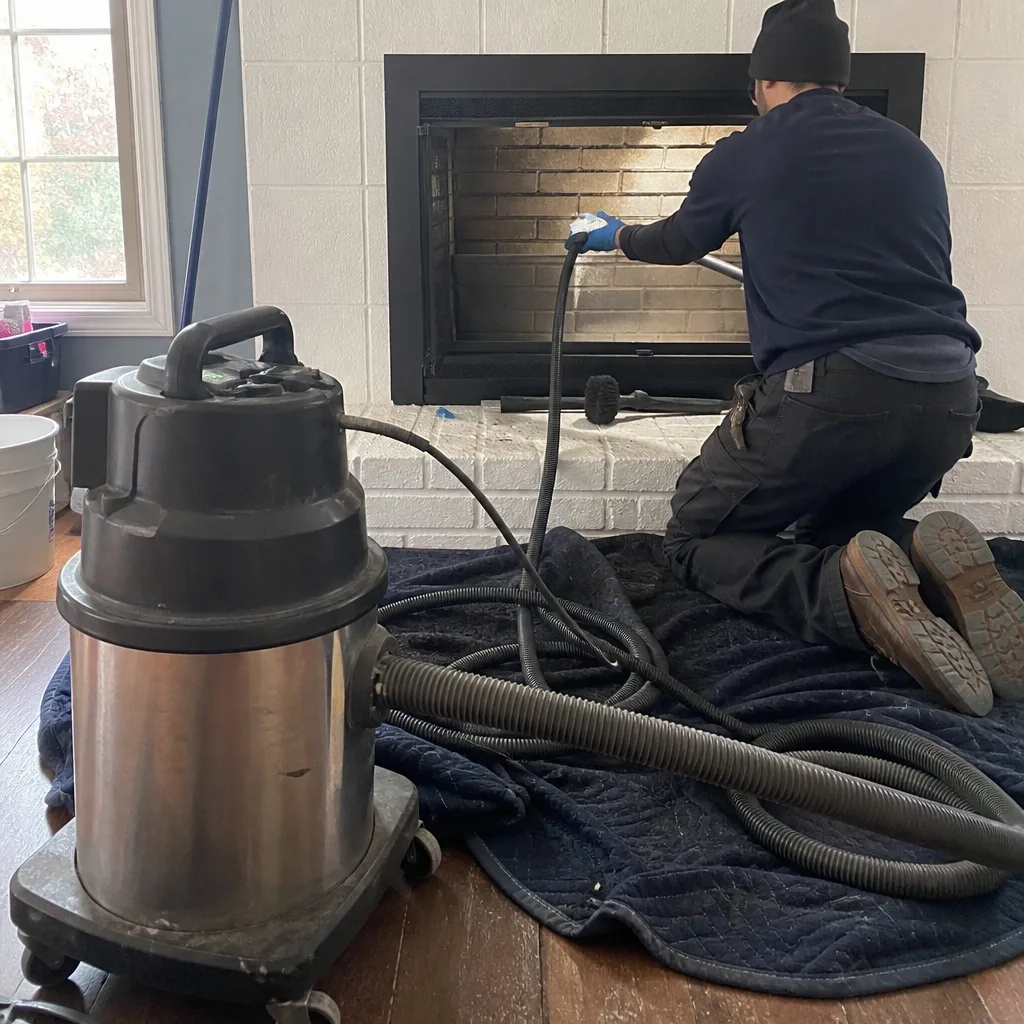
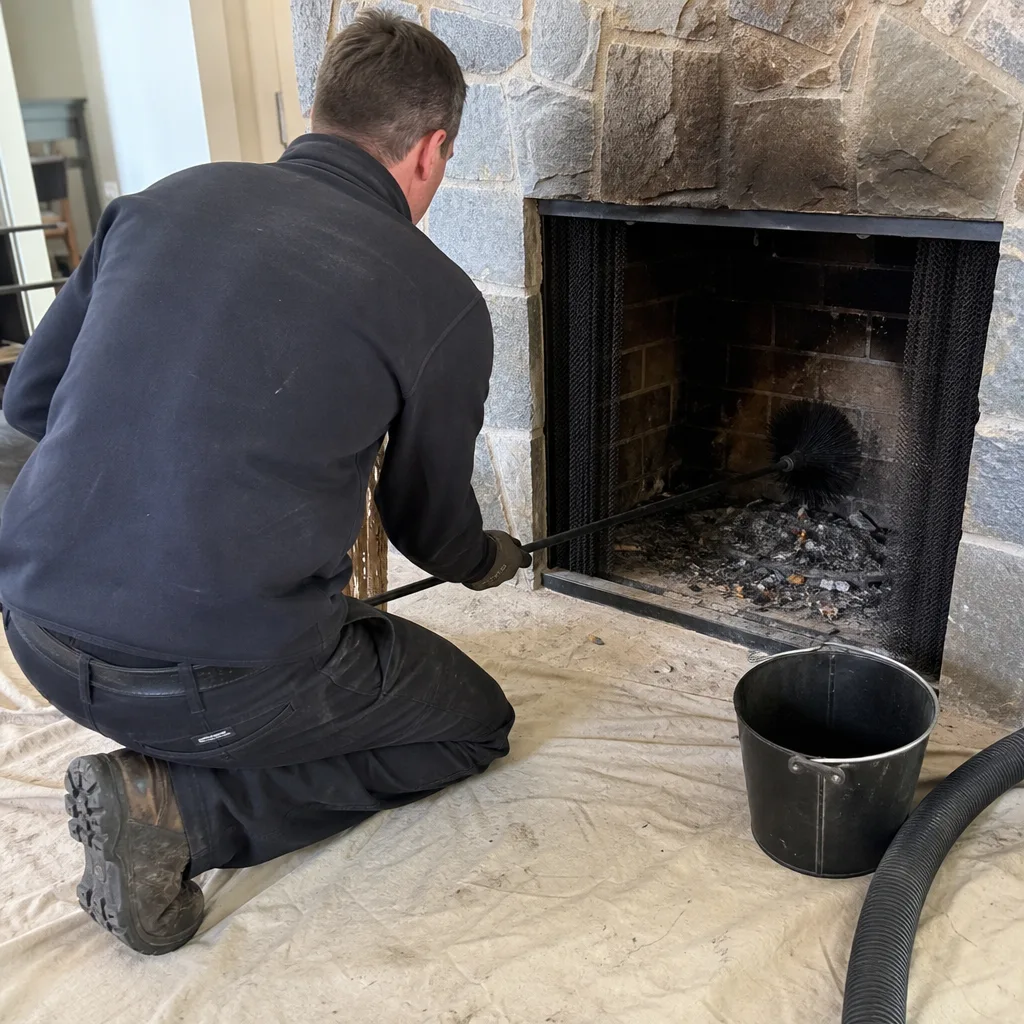
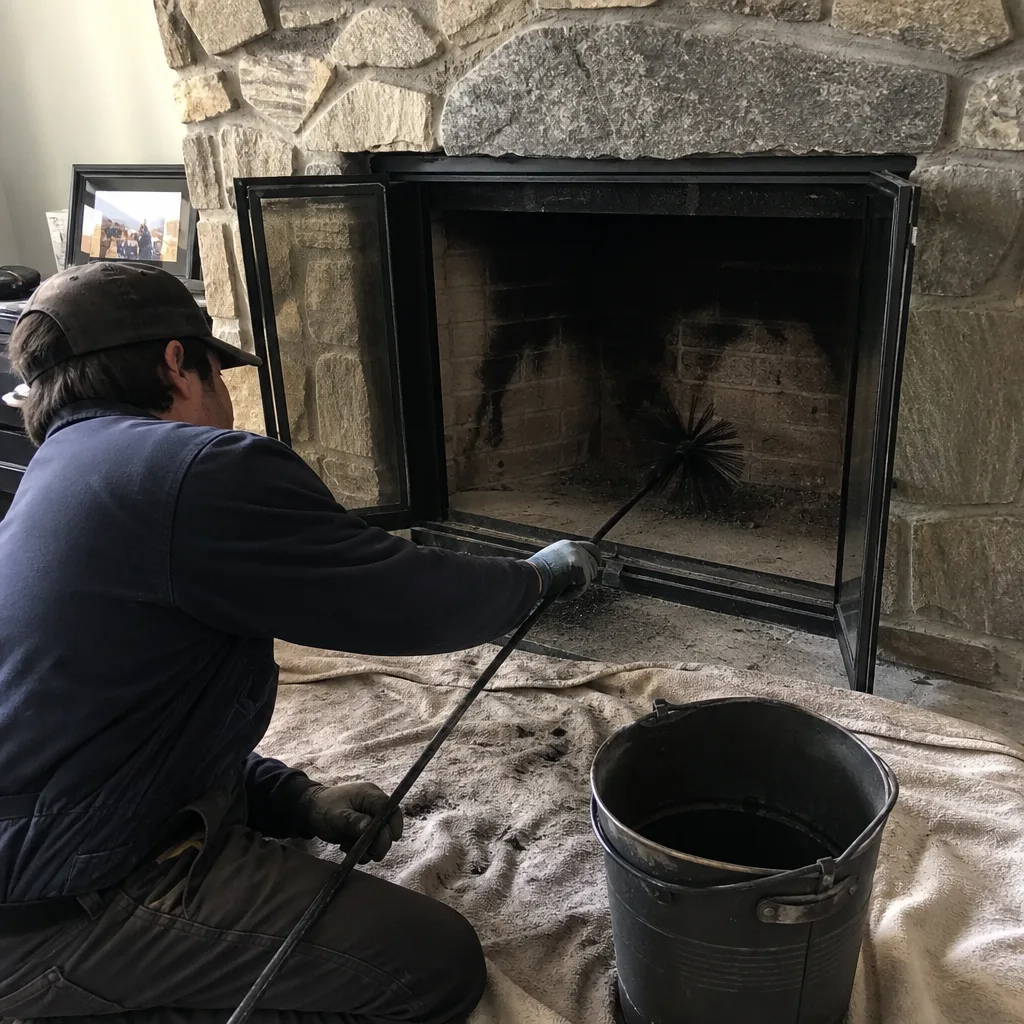
Chimney sweep logs do not sweep chimneys. They loosen some creosote - which then falls where a brush and vacuum still have to collect it.
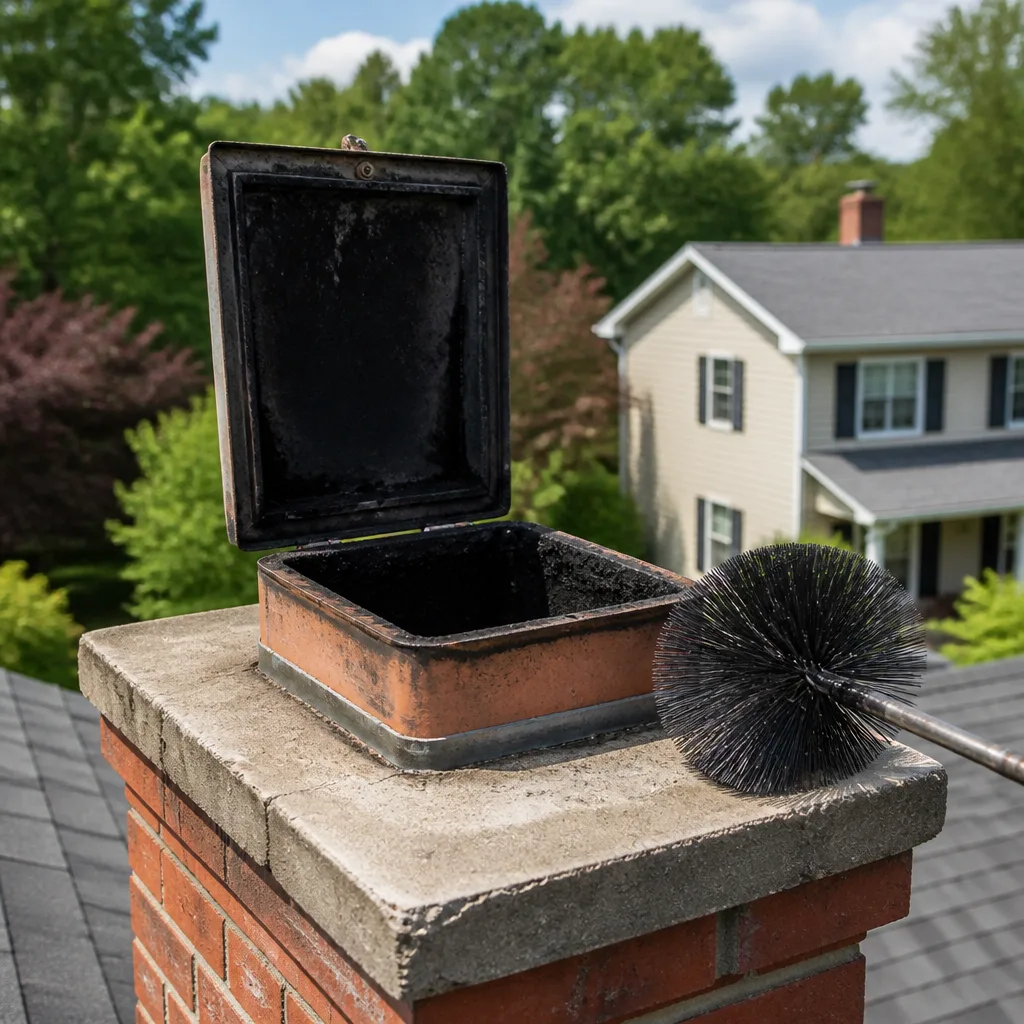
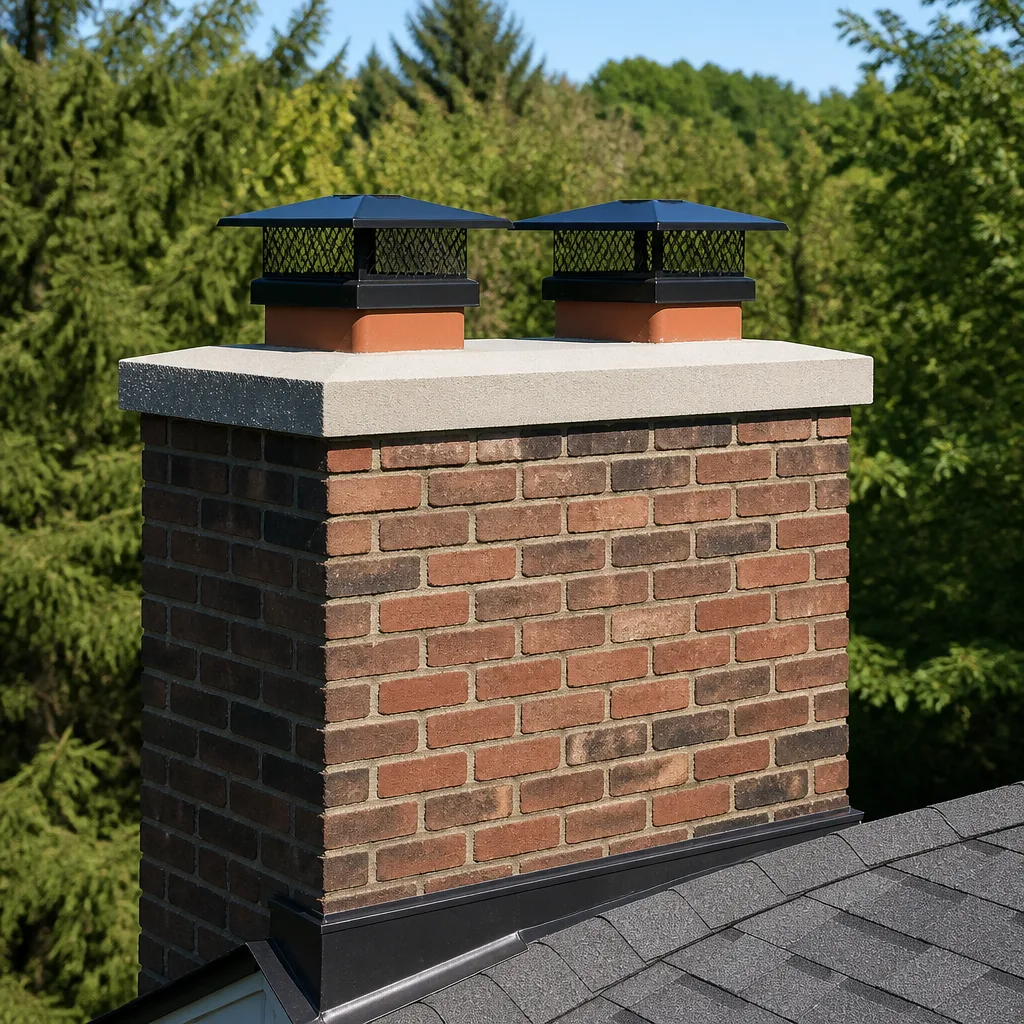
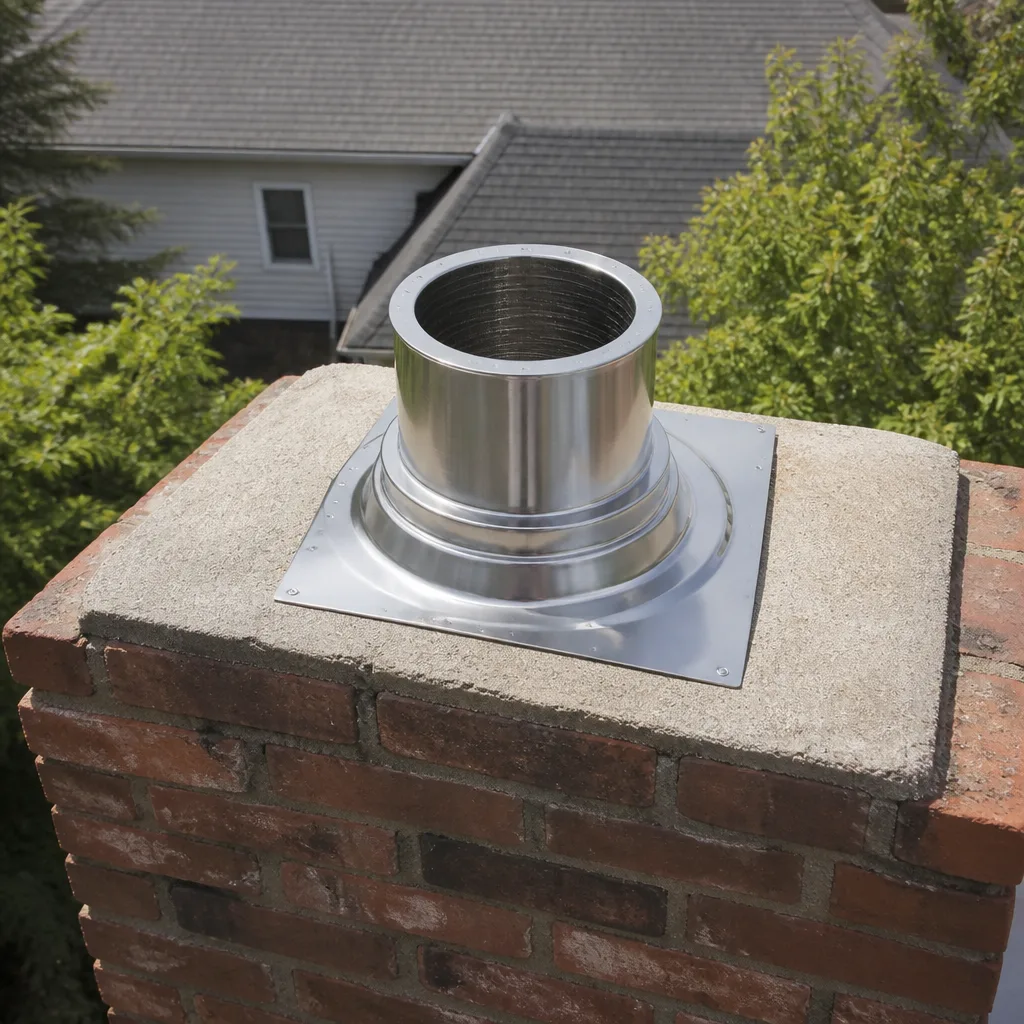
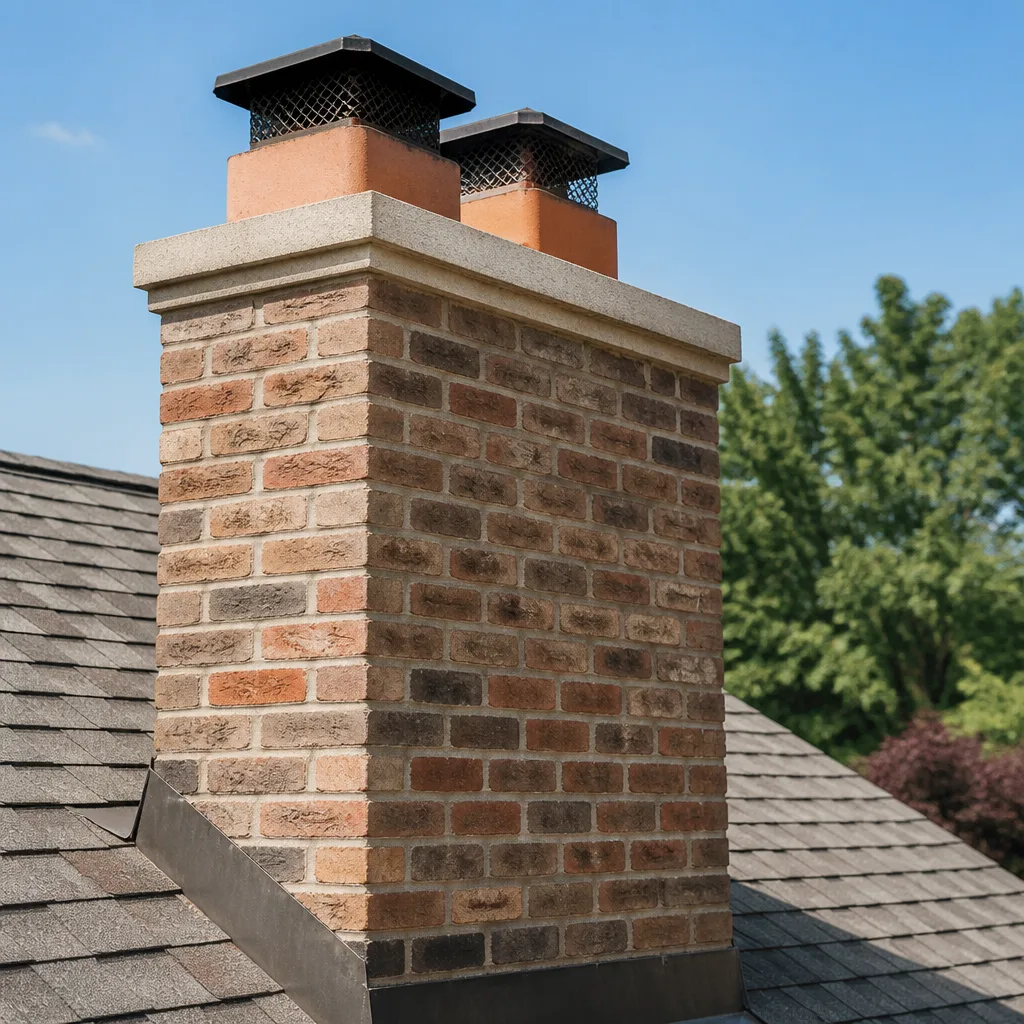
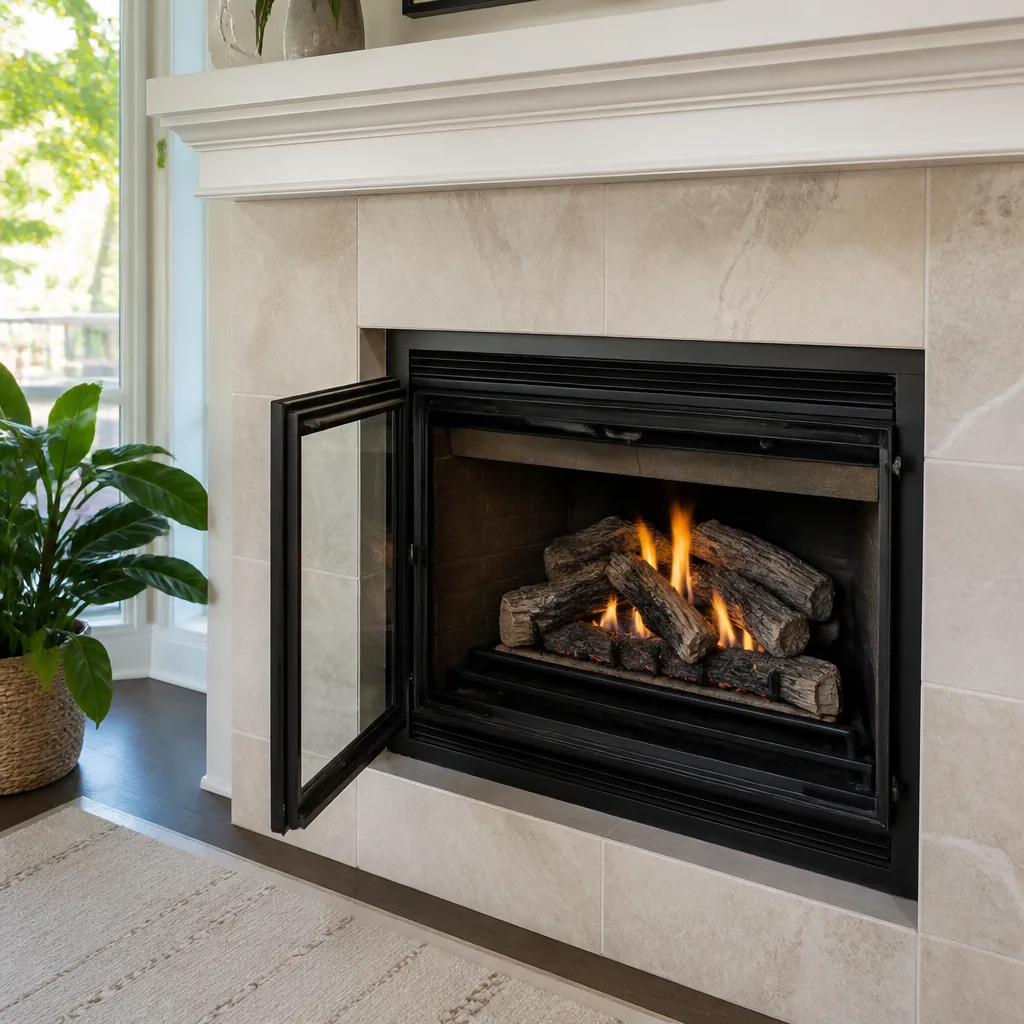
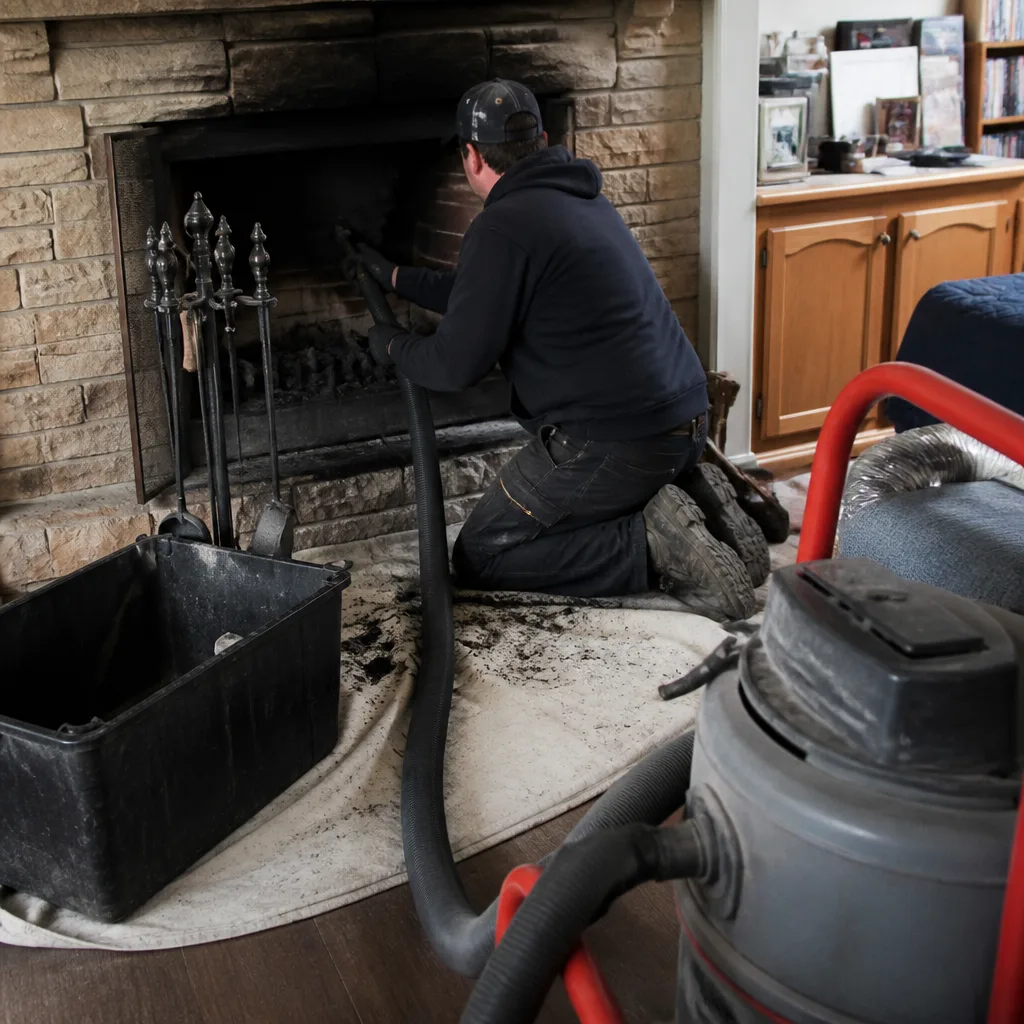 Before
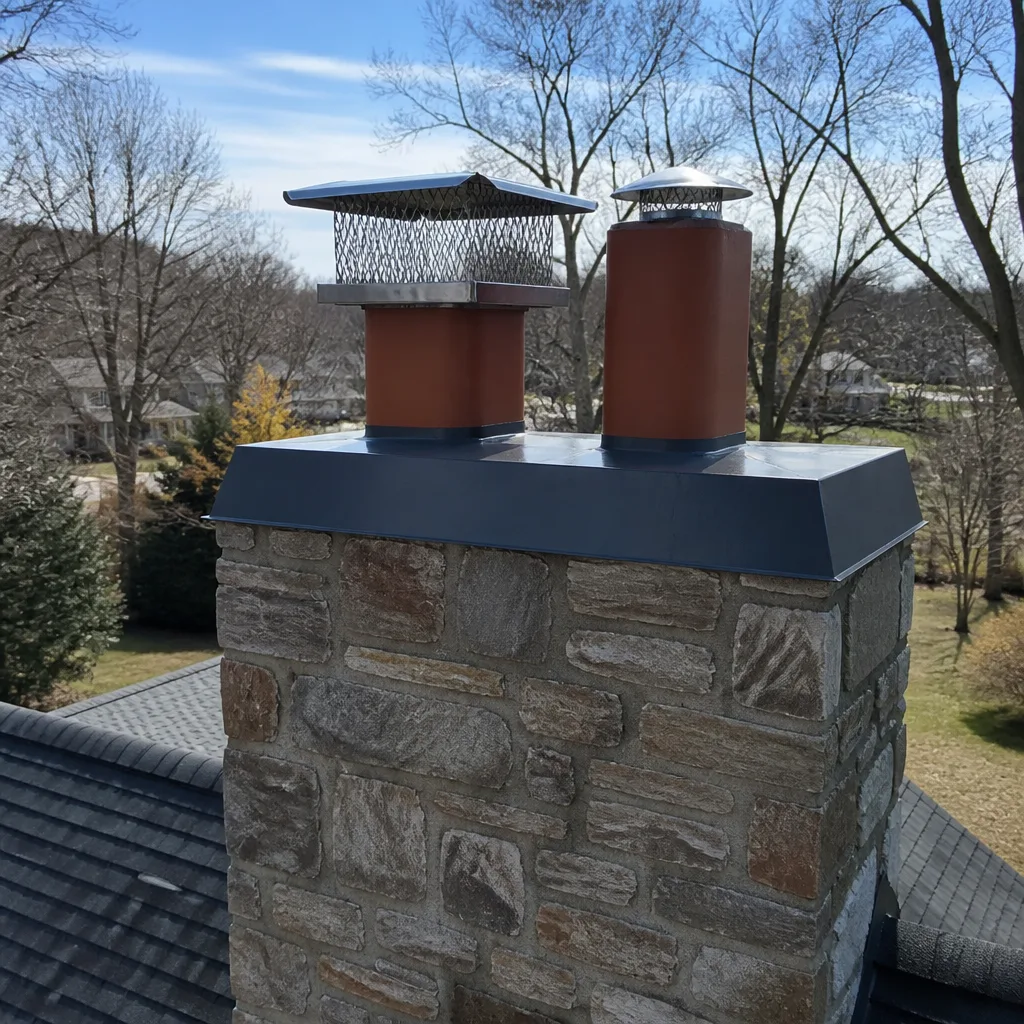 After
After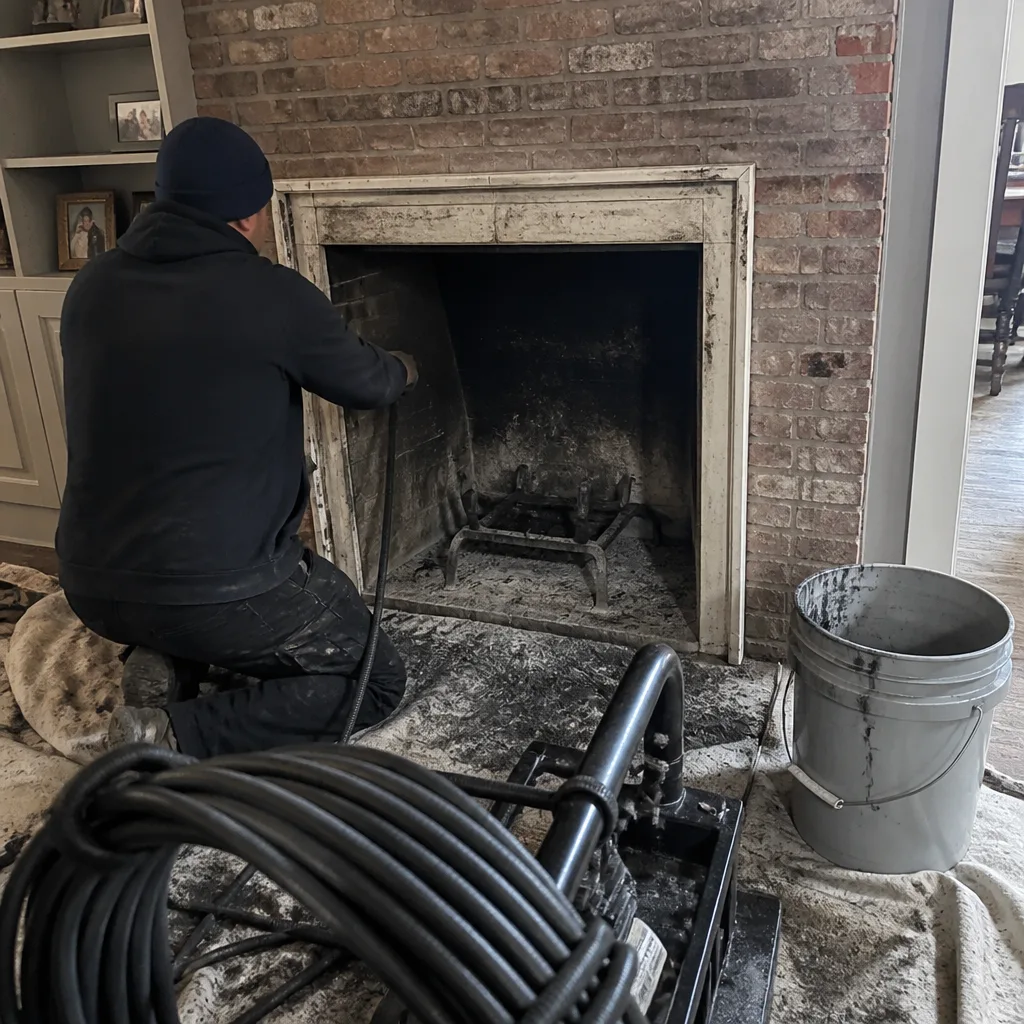 Before
 After
After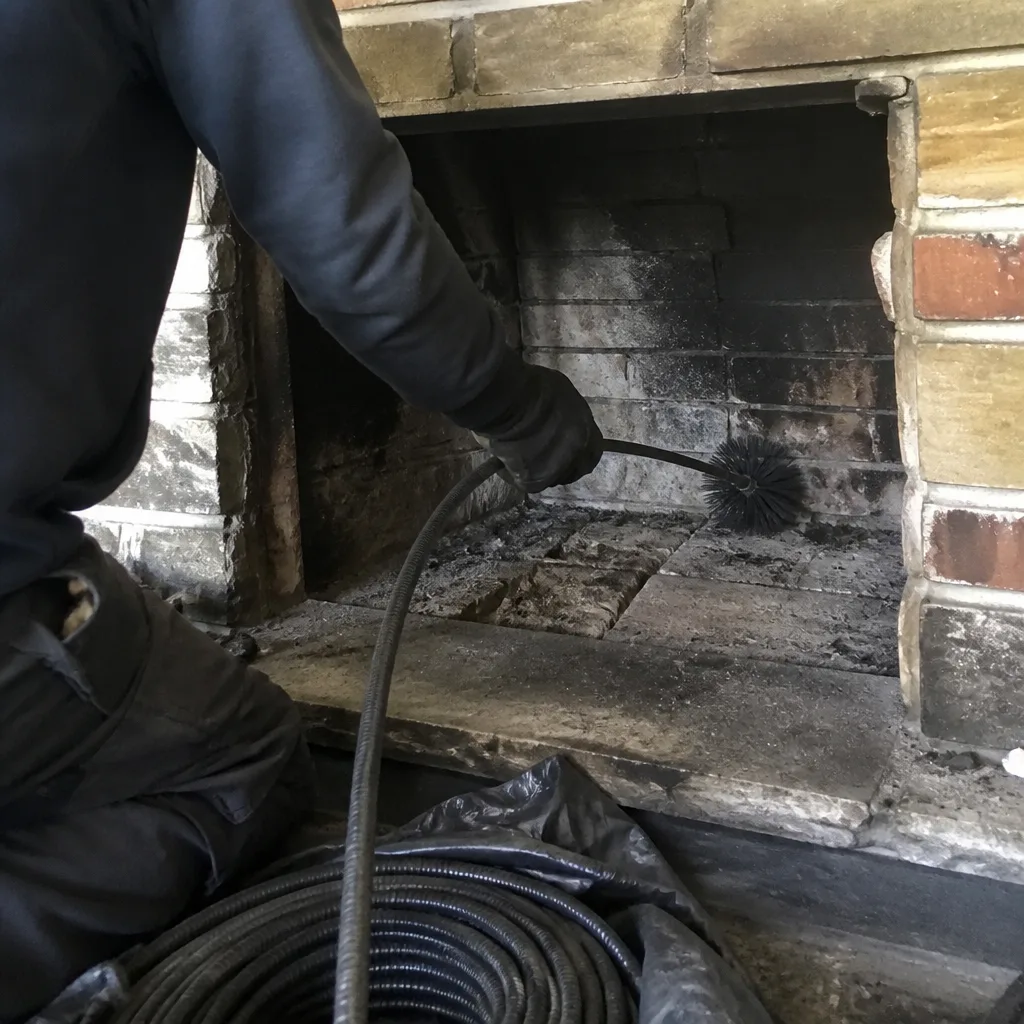 Before
 After
AfterChimney Cleaning Warning Signs: A Downingtown Homeowner’s Reference Guide
That strong campfire smell wafting through your Downingtown home in July, with no fire burning and the damper clamped shut, is not your imagination. In our experience across more than 38,000 chimney inspections since 2009, it’s one of the most commonly dismissed warning signs we encounter, and one of the most reliable indicators of Stage 2 or 3 creosote buildup cooking off in a hot, unventilated flue. Most more guides & resources stop at “call a professional.” This one pairs every symptom with its probable mechanical cause, the diagnostic step that confirms it, and the cost range you’re likely to face - so you know whether you’re scheduling routine maintenance or stopping use until someone arrives.
Quick Answer
The seven critical chimney warning signs are: persistent odors (especially in summer), visible creosote flakes in the firebox, smoke entering the room during use, white efflorescence or spalling brick, rust staining on damper or firebox walls, water dripping or staining in the firebox, and animal sounds or debris. Each points to a specific failure mode - creosote accumulation, liner breach, cap failure, or crown deterioration - and each carries a different urgency level and cost profile.
Table of Contents
- The Seven Warning Signs, Ranked by Urgency
- The Odor Guide: What Your Chimney Is Telling You by Smell
- Visual Signs Inside the Firebox: What Spalling, Efflorescence, and Rust Mean
- Draft Problem, Liner Problem, or Cap Problem: A Diagnostic Framework
- What to Document With Your Phone Before the Contractor Arrives
- Downingtown-Specific Factors: Climate, Codes, and Common Conditions
- Typical Cost Ranges by Warning Sign in the Downingtown Market
- Common Mistakes to Avoid
- When to Call a Professional
- Frequently Asked Questions
 Before
 After
AfterThe Seven Warning Signs, Ranked by Urgency
Not every warning sign demands the same response. We’ve organized these by what you should do today versus what you can schedule within the month.
Level 1 - Schedule Within 30 Days
1. Persistent campfire or asphalt odor, especially in summer
The smell of old fires in July is creosote volatilizing. When outside temperatures climb into the 80s and 90s, a Downingtown flue that hasn’t been swept can reach 120°F or higher. Heat activates the hydrocarbons in Stage 2 (glazed) and Stage 3 (hardened) creosote. The odor enters through the damper seal, through small gaps in the firebox masonry, or via the cleanout door in the basement.
Probable cause: Creosote accumulation exceeding 1/8 inch, the NFPA 211 threshold for mandatory cleaning covered in The Complete Guide to Chimney Cleaning in Downingtown. In our experience, Downingtown homes built between 1985 and 2005 with factory-built metal chimneys are particularly prone to rapid glazed creosote formation due to cooler flue gas temperatures from efficient inserts.
Diagnostic step: Open the damper and shine a flashlight up the flue. If you see shiny, black, tar-like deposits or crusty, popcorn-textured buildup, you’re looking at Stage 2 or 3. A mirror on an extension pole helps, or a phone photo with flash.
Typical cost: $199-$289 for a Level 1 sweep with camera inspection in the Downingtown market. If glazed creosote requires chemical treatment before mechanical removal, add $75-$150.
2. Creosote flakes or “soot fall” in the firebox
Small black flakes on the firebox floor mean creosote has built up enough to fracture and detach. This is advanced accumulation, but the flue is still structurally sound.
Probable cause: Burning unseasoned wood, restricted air supply, or a flue that’s oversized for the appliance. In Downingtown’s older neighborhoods like West Bradford and East Caln, we regularly see 8×12 flues serving modern inserts that need 6-inch liners - the mismatch causes incomplete combustion and rapid creosote formation.
Diagnostic step: Measure flake thickness with a ruler. Flakes over 1/4 inch indicate Stage 3 creosote. Note whether they’re powdery (Stage 1, sweepable) or hardened and shiny (Stage 2-3, may need treatment).
Typical cost: $199-$289 for sweep; $1,800-$3,200 if liner downsizing is needed.
Level 2 - Schedule Within 7 Days; Limit Fireplace Use
3. Smoke entering the room during use
Smoke rollback is never normal. It indicates either a draft deficiency, a partial flue blockage, or a breach in the liner allowing smoke to escape into surrounding masonry.
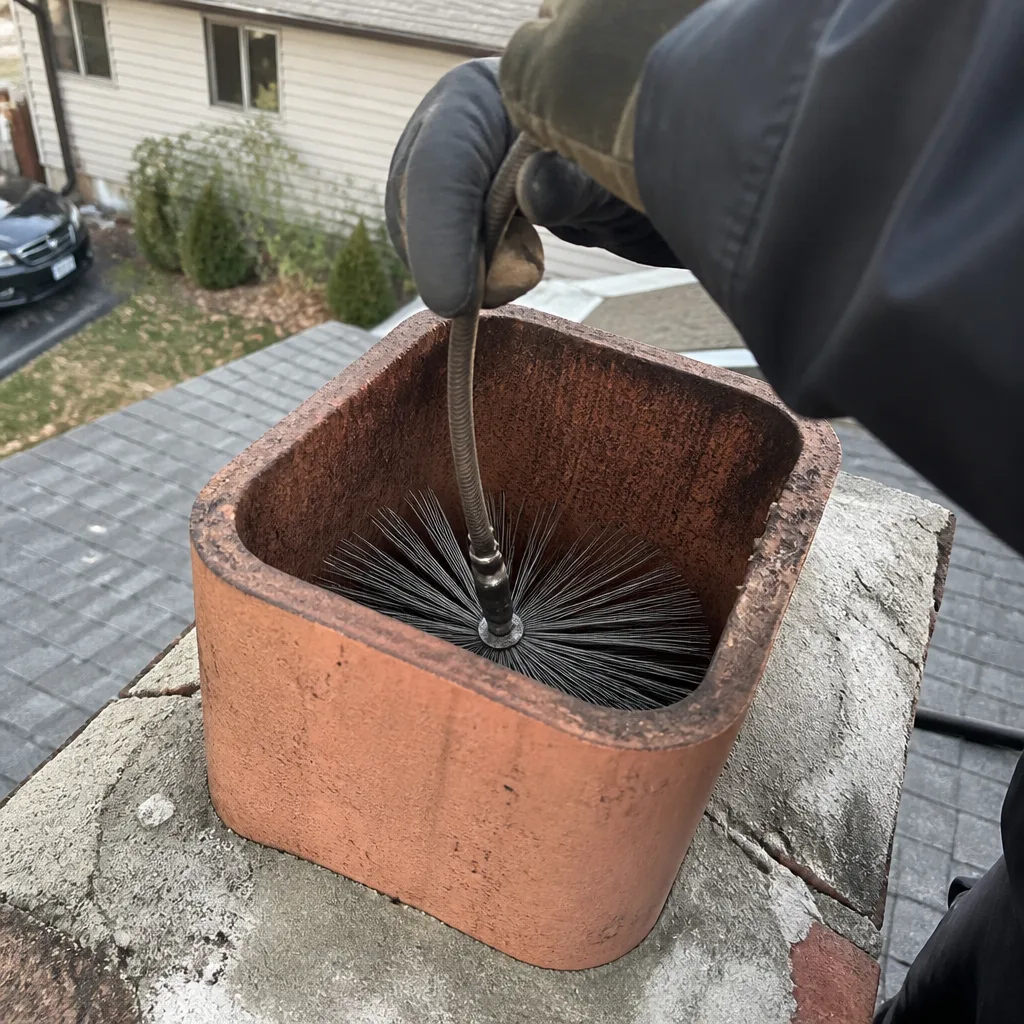
Probable cause: Often a combination. A cold flue on first lighting, a partially blocked cap, or a liner that has shifted or corroded. In Downingtown’s 1920s-1950s housing stock, we find terra cotta liners with vertical cracks or missing segments, especially above the roofline where freeze-thaw cycles are most aggressive.
Diagnostic step: Note when smoke appears - immediately on lighting (likely cold flue or cap blockage) or after 10-15 minutes of burning (likely liner breach or insufficient makeup air). Check if opening a window reduces the problem; if yes, the house is negatively pressurized and the chimney is competing with exhaust fans.
Typical cost: $199-$289 for inspection and sweep; $2,500-$5,500 for stainless steel liner replacement using DuraFlex or Olympia Chimney materials. See How to Hire a Chimney Cleaning Contractor in Downingtown: A Step-by-Step Guide for vetting installers.
4. White powder (efflorescence) on firebox or exterior chimney brick
Efflorescence is salt crystallization from moisture moving through masonry. It’s not merely cosmetic - it signals water intrusion that’s accelerating mortar deterioration.
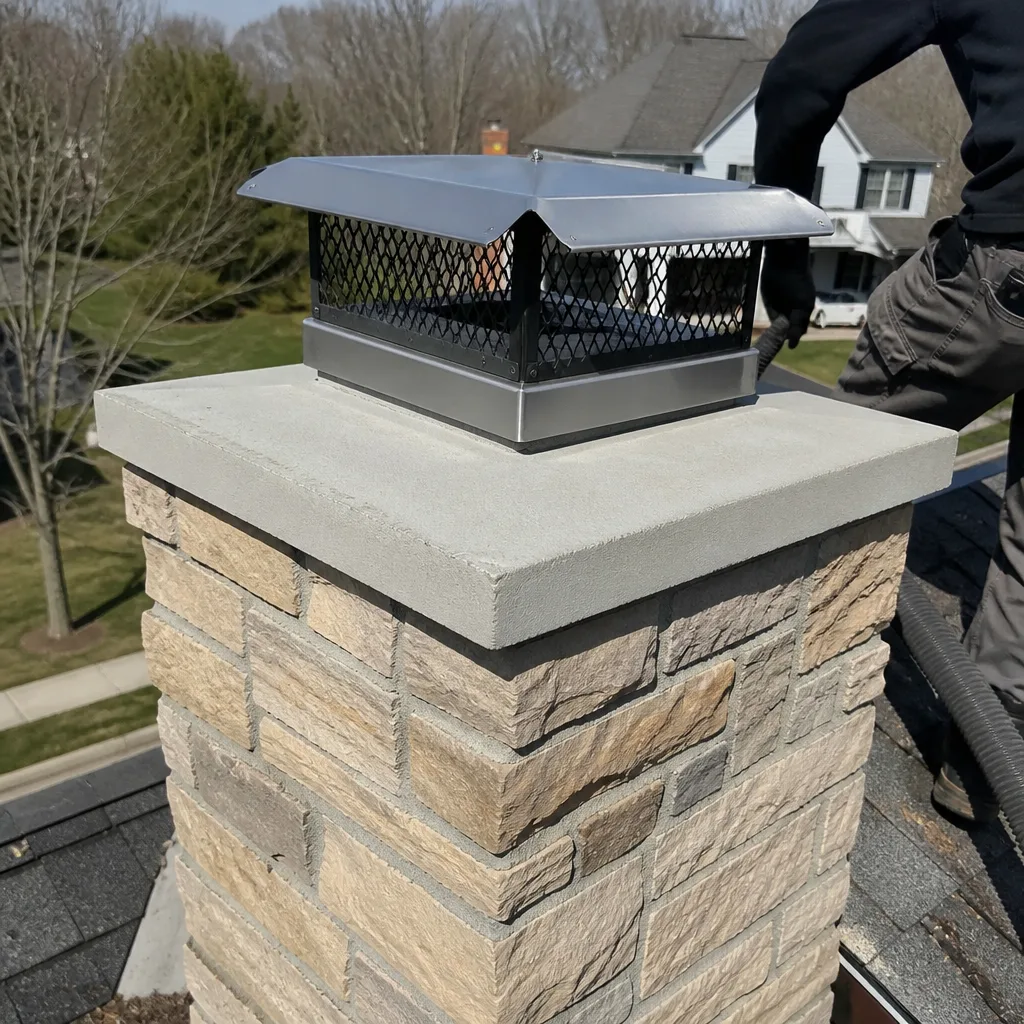
Probable cause: Crown cracks, deteriorated mortar joints, or failed flashing. Downingtown’s freeze-thaw cycles, with temperatures swinging from single digits to 50°F+ in winter weeks, force water into microcracks that expand on freezing. We’ve documented this pattern extensively in the Bradford Hills and Marsh Creek areas.
Diagnostic step: Is the powder on the firebox walls (water entering from above, likely crown or cap) or on exterior brick below the roofline (likely flashing)? Tap the brick with a key - a hollow sound indicates spalling behind the surface.
Typical cost: $350-$800 for crown repair or sealing; $1,200-$2,800 for partial rebuild with proper water management.
Level 3 - Do Not Use; Call Today
5. Rust staining on damper, firebox walls, or smoke shelf
Rust in a masonry firebox means water is present in quantities that threaten structural integrity. The damper is steel; when it rusts, it warps and fails to seal, creating a path for carbon monoxide and conditioned air loss year-round.
Probable cause: Chronic water intrusion, often from a missing or deteriorated chimney cap, crown failure, or lateral water entry where the chimney passes through the roof. In Downingtown, we’ve traced rust to failed chimney chase covers on factory-built units - a $15 part that destroys a $400 damper assembly.
Diagnostic step: Note rust color. Orange-brown flakes indicate active, ongoing water. Black staining with rust particles suggests past water with creosote mixing in. Operate the damper - if it binds or grinds, the rust has progressed to mechanical failure.
Typical cost: $250-$600 for damper replacement; $1,500-$4,000 if water damage has compromised the smoke chamber or firebox walls.
6. Water dripping or puddling in the firebox
Active water in the firebox is an emergency for the chimney structure and a potential hazard for the home. Water accelerates liner deterioration, weakens mortar, and can reach framing members.
Probable cause: Crown failure, missing cap, or severe flashing deterioration. In Downingtown’s heavier snowfall winters, ice damming can force water backward under flashing that appeared sound in summer. We’ve documented this in homes along the East Branch Brandywine Creek watershed where wind-driven rain compounds the exposure.
Diagnostic step: Place a container and note drip rate. Check the attic space around the chimney penetration for staining. If water appears only during heavy rain versus melting snow, the entry point differs.
Typical cost: $800-$2,500 for crown rebuild and cap installation; $3,500-$8,000 for extensive masonry repair with waterproofing.
7. Animal sounds, nesting debris, or strong organic/decay odor
Squirrels, raccoons, and chimney swifts are common Downingtown intruders. A trapped animal dies quickly; a nest blocks the flue and creates a fire hazard.
Probable cause: Missing or damaged cap, or a cap with mesh too large to exclude small animals. Chimney swifts are federally protected; their nests cannot be disturbed during breeding season (May-August).
Diagnostic step: Listen for movement timing - daytime activity suggests squirrels, nocturnal suggests raccoons. Look for twigs, leaves, or droppings in the firebox. A strong ammonia smell indicates active occupation; a decay odor means a carcass.
Typical cost: $150-$350 for humane removal and sweep; $200-$500 for proper cap installation with appropriate mesh. If swifts are present, wait until fall and install a cap before next spring.
The Odor Guide: What Your Chimney Is Telling You by Smell
Smell is the most commonly reported warning sign and the most poorly understood. Here’s how to distinguish causes without equipment.
| Odor Character | Probable Source | When It’s Worst | Confirmatory Check |
|---|---|---|---|
| Campfire, asphalt, or tar | Creosote volatilization | Hot summer days, humid weather | Shine flashlight up flue; look for glazed black deposits |
| Musty, earthy, like old basement | Mold in flue from chronic moisture | After rain, in humid conditions | Check for water staining in firebox; inspect exterior for missing cap |
| Ammonia, urine, or musk | Active animal occupation | Variable, often morning/evening | Listen for movement; look for debris at damper level |
| Rotting, sulfurous | Dead animal | Constant, worsening | Visual inspection with mirror; may require camera to locate carcass |
| Sharp, chemical, exhaust-like | Combustion gas backdraft | When furnace/water heater runs | Check if odor correlates with HVAC cycle; CO detector status critical |
The combustion gas backdraft odor deserves special attention. If you smell exhaust when the furnace or water heater cycles, the chimney may be competing for draft with another appliance, or the liner may be breached between flues in a multi-flue chimney. This is a carbon monoxide risk. Verify your CO detectors are functional and call for inspection before using any vented appliance.
In Downingtown homes with basements, we’ve found that negative pressure from dryer vents and bathroom fans on the lower level can reverse draft in chimneys serving upper-floor fireplaces. The solution is often makeup air or a dedicated combustion air duct, not chimney repair - but the diagnosis requires a pressure test and camera inspection, not guesswork.
Visual Signs Inside the Firebox: What Spalling, Efflorescence, and Rust Mean
The firebox is where most homeowners can observe conditions directly. Here’s what to look for and what each finding indicates structurally.
Spalling Brick or Mortar
Spalling is the flaking or popping of brick faces, exposing the softer interior. It occurs when water enters brick, freezes, and expands. In Downingtown’s climate, a single wet winter can accelerate spalling that took a decade to initiate.
Structural meaning: The masonry’s protective fired surface is compromised. Water penetration accelerates; freeze-thaw damage compounds. Left unaddressed, spalling progresses through the wythe (thickness) of the brick, compromising the chimney’s structural wall. We’ve replaced firebox walls in 15-year-old chimneys where spalling was ignored for three seasons.
What to document: Photo the spalled area with a coin or ruler for scale. Note whether it’s localized (point repair possible) or widespread (rebuild indicated). Check if the spalling is on the firebox side (direct fire exposure) or the exterior face (weather exposure) - the cause and repair differ.
White Efflorescence
Efflorescence is salt crystallization, typically white or grayish powder. It indicates water is moving through the masonry, dissolving soluble salts, and depositing them at the evaporation surface.
Structural meaning: Chronic moisture is present. The salts themselves are not structurally damaging, but the water movement that carries them is. In chimneys, this often means the crown or cap has failed, or the chimney lacks proper through-wall flashing at the roofline. We’ve traced efflorescence in Downingtown’s newer construction to missing or improperly lapped housewrap details around chimney chases.
What to document: Photo the efflorescence pattern. Note if it’s seasonal (appears in winter, disappears in summer) or persistent. Seasonal efflorescence suggests cap/crown failure; persistent efflorescence suggests groundwater or failed flashing.
Rust Staining
Orange-brown streaks on firebox walls or the damper assembly indicate iron oxidation from steel components exposed to moisture.
Structural meaning: Water is reaching steel components that should remain dry. The damper is the most vulnerable - when rusted, it warps, fails to seal, and can jam open or closed. A rusted damper left open costs hundreds in conditioned air loss annually; one jammed closed creates a smoke hazard.
What to document: Photo rust location and extent. Operate the damper through its full range and note binding or noise. Check the smoke shelf (the flat area behind the damper) for rust debris that indicates long-term water exposure.
Smoke Staining Above the Damper
Black staining on the smoke chamber walls above the damper indicates smoke has escaped the flue during use.
Structural meaning: Either the damper was left partially closed during firing, or smoke is finding a path outside the flue liner. In older Downingtown homes with unlined brick chimneys, smoke can migrate through mortar joints into surrounding structure. In lined chimneys, staining suggests a liner breach or improper liner connection at the smoke chamber.
What to document: Photo the staining pattern. Note whether it’s uniform (damper operation issue) or localized to one side (liner breach). Check for corresponding odor in upper-floor rooms near the chimney chase.
Draft Problem, Liner Problem, or Cap Problem: A Diagnostic Framework
Smoke in the room is the symptom that generates the most emergency calls. Here’s how to distinguish three common causes before the contractor arrives.
- Note the timing. Smoke on initial lighting, especially with cold outdoor temperatures, suggests a cold flue or blocked cap. Smoke after 10-15 minutes of established fire suggests a liner issue or house pressure problem.
- Check the cap from ground level. Use binoculars or a zoom phone photo. Look for visible debris, nesting material, or a cap that’s shifted or missing. A blocked cap is the cheapest fix; confirm or rule it out first.
- Open a window near the fireplace. If smoke improves significantly, the house is negatively pressurized. Modern Downingtown homes - especially those built 2015-2025 with tight envelopes and powerful range hoods - can depressurize enough to overcome chimney draft. The fix is makeup air, not chimney repair.
- Check other vented appliances. If the water heater or furnace backdrafts when the fireplace operates, the chimney system is competing for capacity. This is common in multi-flue chimneys where one flue liner has failed, allowing exhaust to cross over.
- Inspect the damper position and condition. A damper that won’t fully open, or that’s warped from rust, creates a restricted throat that smoke cannot clear. The damper should open to at least 90% of the flue area.
Camera inspection resolves the uncertainty. Under Clause 4 of the Haven Standard, we document the full flue length, the liner condition at each joint, and the smoke chamber transition. A homeowner who has completed the five steps above can tell us exactly what they observed, and we can correlate it with the camera record - no diagnostic guesswork, no unnecessary repairs.
What to Document With Your Phone Before the Contractor Arrives
The estimate you receive depends heavily on what the contractor can demonstrate needs doing. Documentation protects you from scope creep and gives the inspector a baseline that speeds diagnosis.
Photo Checklist
- Wide shot of the firebox, showing full width and height
- Close-up of any staining, spalling, or efflorescence, with ruler or coin for scale
- Damper in full open and full closed positions
- Smoke shelf area (flashlight required - debris accumulation here is common and telling)
- Exterior chimney from ground to roof, showing cap, crown, and visible brick condition
- Attic area around chimney penetration, if safely accessible
- Basement cleanout door and any debris below it
Notes to Record
- Date the symptom first appeared
- Weather conditions when it’s worst (rain, snow melt, high wind, temperature)
- Frequency of fireplace use and fuel type (seasoned hardwood, pellets, manufactured logs)
- Any previous chimney work, with dates and contractor names if known
- Whether symptoms correlate with HVAC or other appliance cycles
Bring this documentation to the inspection. A contractor who works from evidence - photos, dates, correlated conditions - will give you a more accurate estimate than one who works from a flashlight glance and a sales pitch. At Level Two Chimney Downingtown, we build our scope from the camera record and your observations together, and we deliver that scope in writing with a fixed price before any work begins, under Haven Standard Clause 1.
Downingtown-Specific Factors: Climate, Codes, and Common Conditions
Downingtown’s location in the Brandywine Valley creates specific chimney stresses that inform what we find and how we repair it.
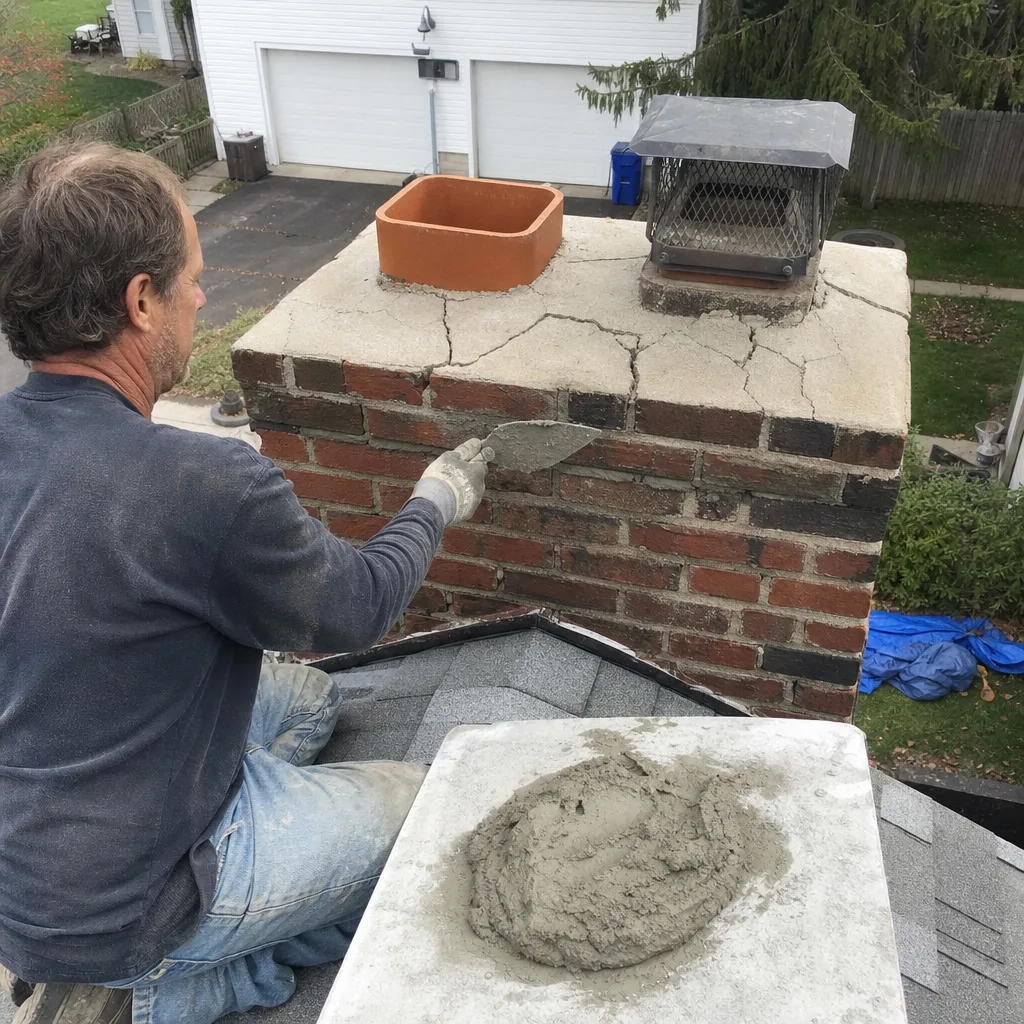
Freeze-thaw cycling: Downingtown averages 20-30 freeze-thaw cycles per winter, with January temperatures swinging from 15°F to 50°F within a week. Each cycle forces water into masonry pores; expansion on freezing creates microcracks that compound. Crown sealants and waterproofing treatments formulated for milder climates fail prematurely here. We specify vapor-permeable silane/siloxane treatments from Copperfield’s professional line that allow moisture escape while blocking liquid water entry.
Wind exposure: The valley topography creates accelerated wind patterns, especially in elevated areas like the Uwchlan and West Vincent townships surrounding Downingtown. Wind-driven rain enters cap and crown gaps that would stay dry in sheltered locations. We see more cap displacement and crown erosion in these exposed sites.
Housing stock age distribution: Downingtown’s core has significant pre-1950 construction with unlined or partially lined brick chimneys, 1960s-1980s split-levels with factory-built metal chimneys, and 2000s-2020s construction with engineered chase systems. Each era has characteristic failure modes. The older brick chimneys often need full liner installation; the factory-built units of the 1970s-1980s frequently need chase cover and cap replacement as original galvanized steel corrodes; newer chases sometimes leak at housewrap transitions or lack proper cricket flashing on sloped roofs.
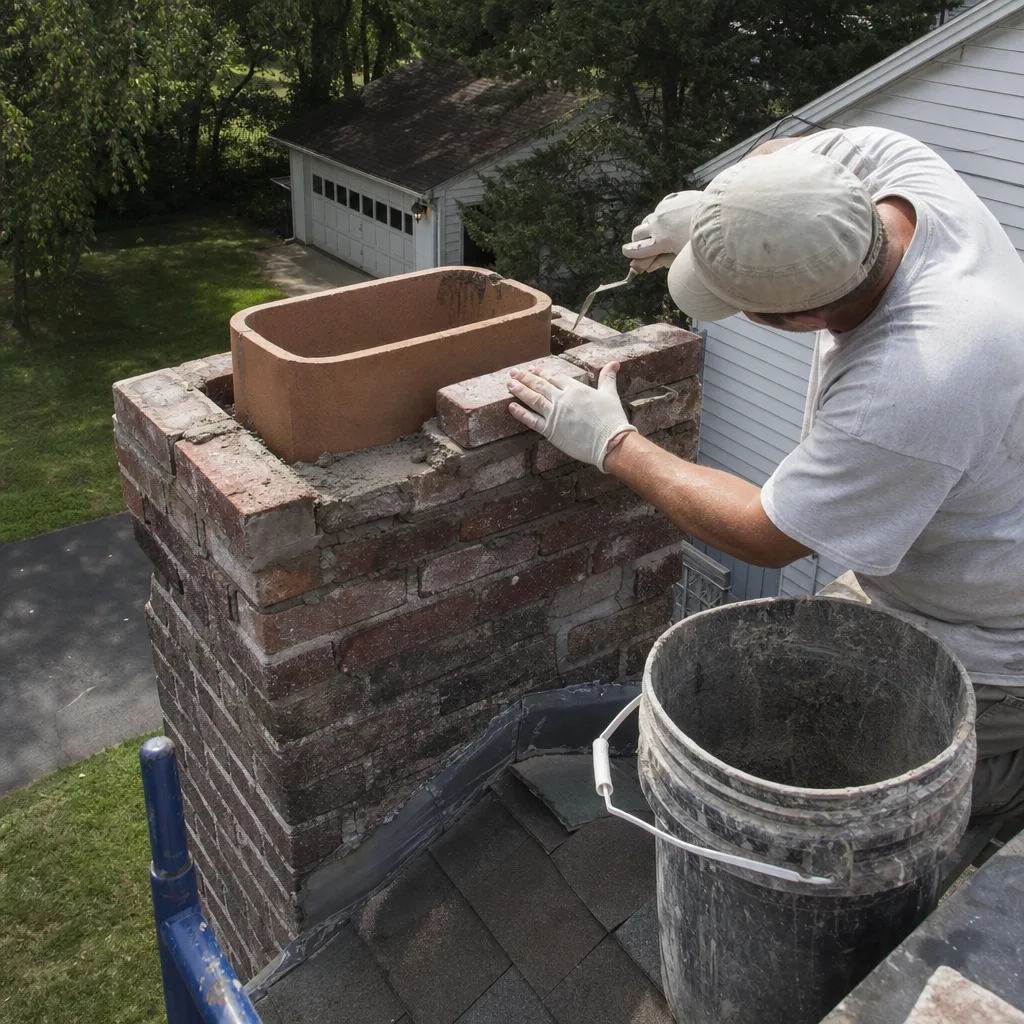
Local code context: Downingtown follows the UCC (Uniform Construction Code) with Chester County amendments. Chimney repairs exceeding 50% of replacement cost trigger full current-code compliance, including liner installation where none exists. This affects scope decisions on older homes - a point repair that meets the 50% threshold can require more extensive work than the visible damage suggests. We calculate this threshold before quoting and explain it in writing.
Wood availability and burning practices: Downingtown’s semi-rural character means many homeowners have access to firewood from property trees or local suppliers. Unseasoned wood - cut less than 12 months, or stored uncovered - is the single largest contributor to rapid creosote accumulation we encounter. The wood may be “local,” but if it’s above 20% moisture content, it’s producing glazed creosote in a single burning season.
Typical Cost Ranges by Warning Sign in the Downingtown Market
These ranges reflect our 2024-2025 pricing for Downingtown-area work, using materials from DuraFlex, Olympia Chimney, Famco, and Copperfield sourced through Haven’s buying network. Every job is quoted in writing before work begins, with no variance without written change order.
| Warning Sign / Repair Type | Typical Range | What Drives Variation |
|---|---|---|
| Level 1 sweep with camera inspection | $199-$289 | Accessibility, roof pitch, flue configuration |
| Glazed creosote chemical treatment + sweep | $274-$439 | Stage severity, flue length, number of flues |
| Stainless steel liner installation (single flue) | $2,500-$5,500 | Flue length, diameter, insulation requirements, appliance type |
| Crown repair or rebuild | $350-$2,500 | Extent of cracking, need for forming vs. overlay |
| Cap installation (standard mesh) | $200-$500 | Flue size, material (galvanized vs. stainless vs. copper), multi-flue configuration |
| Damper replacement (throat or top-mount) | $250-$800 | Type, size, remote control option |
| Firebox wall repair (partial) | $800-$2,000 | Area affected, refractory panel vs. brick rebuild |
| Smoke chamber parging | $1,200-$2,500 | Chamber size, access difficulty, material (cementitious vs. cast refractory) |
| Chimney rebuild (above roofline) | $3,500-$8,000 | Height, brick matching, scaffolding requirements |
| Waterproofing treatment | $400-$1,200 | Chimney surface area, prep cleaning, product specification |
Our Free Second Opinion on any written estimate applies to all of these scopes. Bring us a competitor’s written quote and we’ll review it against the camera record, item by item, at no charge.
Common Mistakes to Avoid
- Assuming a “chimney sweep” includes inspection. In Pennsylvania, anyone can call themselves a sweep. A sweep without a camera inspection is just brushing; it cannot detect liner breaches, crown deterioration, or hidden creosote buildup. Our Chimney Cleaning & Sweep in Downingtown includes NFPA 211 Level 2 camera inspection as standard, not optional.
- Using the fireplace “just once more” with smoke rollback. Smoke in the room means combustion products are not exiting the flue completely. Carbon monoxide is odorless and invisible; visible smoke is the warning that comes before the one you cannot detect.
- Installing a DIY cap from a big-box store without measuring flue dimensions. Ill-fitting caps create gaps that admit water and animals, or block draft with undersized mesh. Proper cap specification requires flue dimension, appliance type, and local wildlife pressure.
- Ignoring summer odors because “we’re not using it anyway.” Summer creosote odor is not harmless - it indicates accumulation that will be a fire hazard in fall, and the hot flue conditions that produce it can accelerate liner corrosion.
- Accepting a verbal estimate or “range” that converts to a higher final bill. Haven Standard Clause 1 requires a written price, written scope, and written warranty before work starts. Any contractor unwilling to commit in writing is planning to expand the scope.
- Hiring based on lowest price without verifying camera inspection is included. The $99 sweep special is a loss-leader that recovers margin on “discovered” repairs. Without your own documentation or a camera record you can see, you have no basis to evaluate what’s truly needed.
- Neglecting to check attic conditions around the chimney. Water that enters the chimney structure often manifests first in attic staining or insulation compression, long before it reaches the firebox. Annual attic inspection around the chimney chase prevents surprises.
When to Call a Professional
Call today if you have active water in the firebox, smoke entering the room during normal operation, or a combustion gas odor that correlates with appliance cycles. These conditions carry immediate safety implications.
Schedule within the week for rusted damper operation, visible liner damage, or animal intrusion with active nesting.
Schedule within 30 days for persistent odors, creosote flakes, or efflorescence without active water - these are maintenance thresholds, not emergencies, but they worsen predictably if deferred.
Level Two Chimney Downingtown offers free estimates in Downingtown and surrounding Chester County communities. Every estimate includes camera inspection, documented photo record, and written scope with fixed pricing under Haven Standard Clause 1. Call (484) 558-2798 - phones are answered live, 24 hours a day, 7 days a week.
Frequently Asked Questions
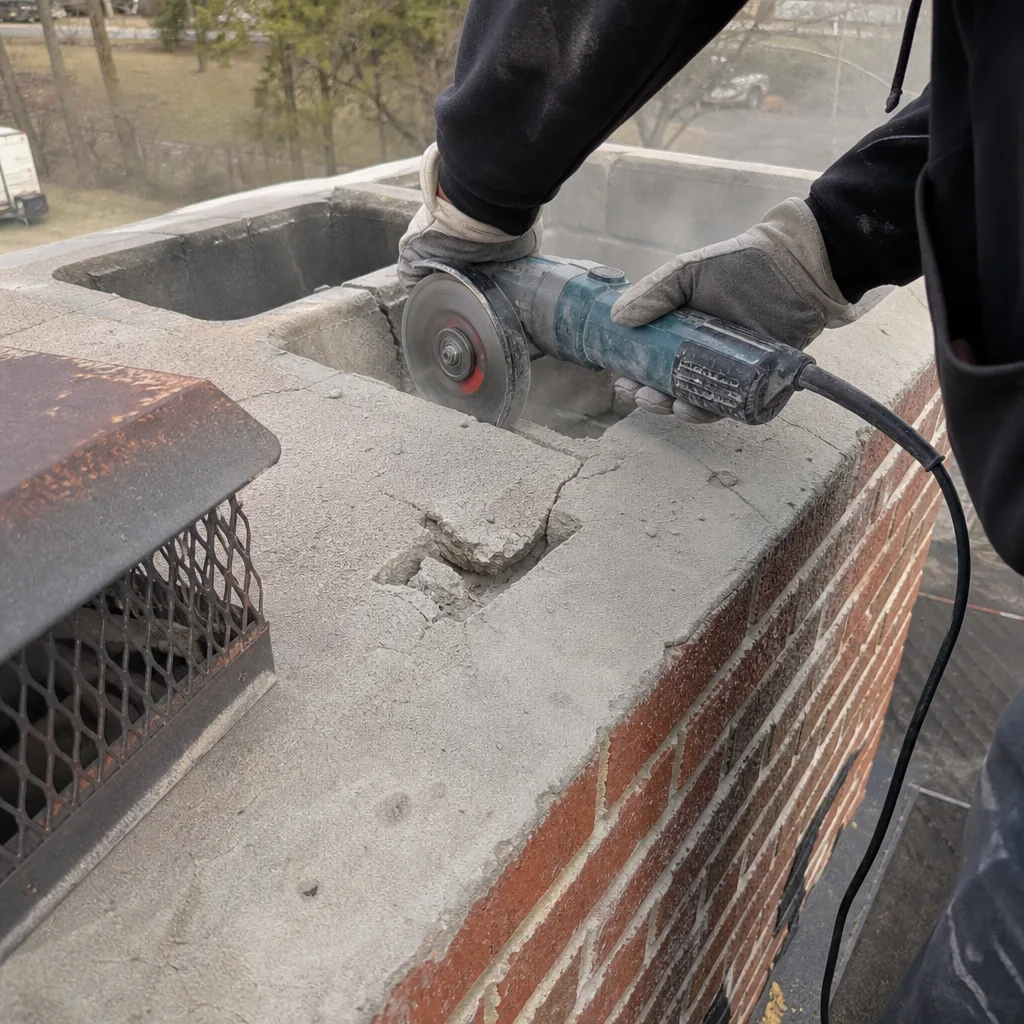
A professional chimney sweep with NFPA 211 Level 2 camera inspection in Downingtown typically costs $199-$289 for a standard single-flue system. If glazed creosote requires chemical pretreatment, expect $274-$439. Every job we perform includes the camera scan, photo documentation, and written report - not optional add-ons. Call (484) 558-2798 for an exact quote; estimates are free.
You need a new liner when the existing one is breached, corroded, or improperly sized for the appliance it serves - conditions a sweep alone cannot fix. A sweep removes creosote; it does not restore liner integrity. We show you the camera record and explain exactly what we found before recommending replacement. If a competitor’s written estimate says you need a liner, bring it to us for a Free Second Opinion.
NFPA 211 recommends annual inspection; cleaning frequency depends on use and fuel. A Downingtown home burning seasoned hardwood 2-3 times weekly typically needs sweeping every 1-2 cord burned, or roughly annually. Homes with pellet inserts or gas logs need less frequent cleaning but still require annual inspection for venting integrity. The specific interval depends on what the camera shows, not the calendar.
Skipped maintenance leads to progressive creosote accumulation, which increases chimney fire risk and reduces draft efficiency. In Downingtown’s freeze-thaw climate, minor crown cracks become major water entry points within two to three seasons. Deferred maintenance converts $250 preventive repairs into $2,500+ rebuilds with predictable regularity. The camera record lets you see exactly where you stand and which repairs can safely wait.
Summer heat volatilizes the hydrocarbons in creosote deposits, producing odor that cold winter temperatures suppress. The smell is worse when the house is closed and air-conditioned, creating negative pressure that draws air down the flue. A proper sweep removes the odor source; a top-sealing damper or chimney cap with proper sealing can reduce pressure-driven odor entry. Call (484) 558-2798 if summer odors are persistent - we can diagnose whether it’s creosote, moisture, or another cause.
A small surface crack in refractory paneling may be monitorable; a crack through firebox brick or a gap in mortar joints is a fire hazard that requires repair before use. The critical distinction is whether the crack penetrates to the surrounding structure. Our camera inspection and photo record show you exactly what we’re seeing and whether the condition permits limited use or requires immediate repair. We don’t guess, and we don’t sell repairs that aren’t demonstrably necessary.
A Level 1 inspection is visual, from accessible areas, without tools - appropriate for annual maintenance of chimneys with no changes or known problems. A Level 2 inspection includes video camera examination of the full flue interior, accessible portions of the attic and basement, and documentation of all findings. It’s required for real estate transactions, after chimney fires, when changing appliance type, or when any warning sign is present. Level Two Chimney Co. made Level 2 inspection the default standard in 2009, years before it became common practice; Clause 4 of the Haven Standard requires the photo record on every job.
The Bottom Line
Chimney warning signs are not mysteries to be solved by contractor intuition. Each symptom maps to a specific mechanical condition, each condition has a diagnostic test, and each repair has a verifiable cost range in the Downingtown market. The homeowner who documents what they observe, understands what it likely means, and demands camera evidence before authorizing work is protected from both neglect and overselling. The seven warning signs in this guide, the odor differentiation framework, and the pre-contractor documentation checklist give you that standing. When you’re ready for inspection, Chimney Repair in Downingtown and Fireplace Services in Downingtown from Level Two Chimney Co. include the camera record, written price, and documented warranty that let you verify, not trust. Call (484) 558-2798 for a free estimate - live answer, any hour.
Written by Corrine Halstead, Owner at Level Two Chimney Downingtown, serving Downingtown since 2009.