
Level 1 sweep and inspection to the NFPA 211 annual standard - flue, crown, cap, and flashing checked and photographed
Chimney sweep logs do not sweep chimneys. They loosen some creosote - which then falls where a brush and vacuum still have to collect it.
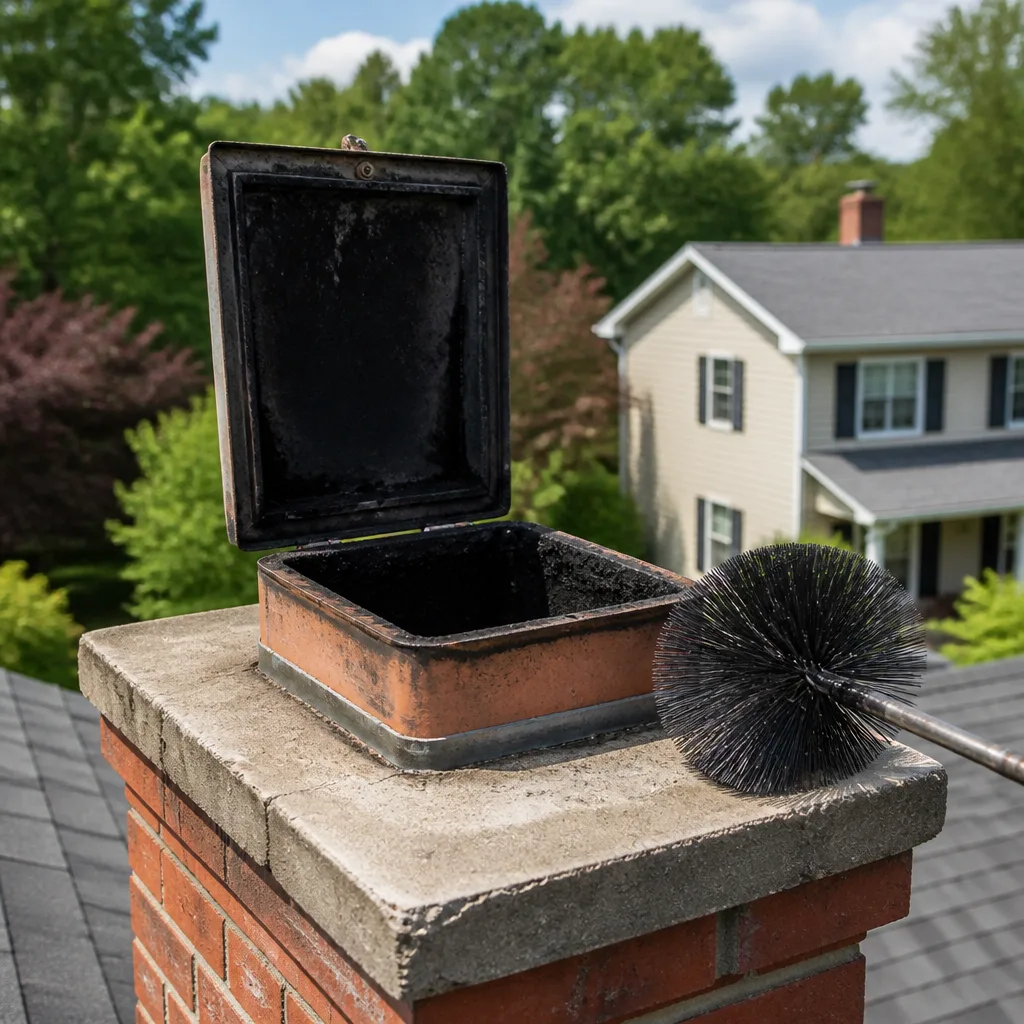
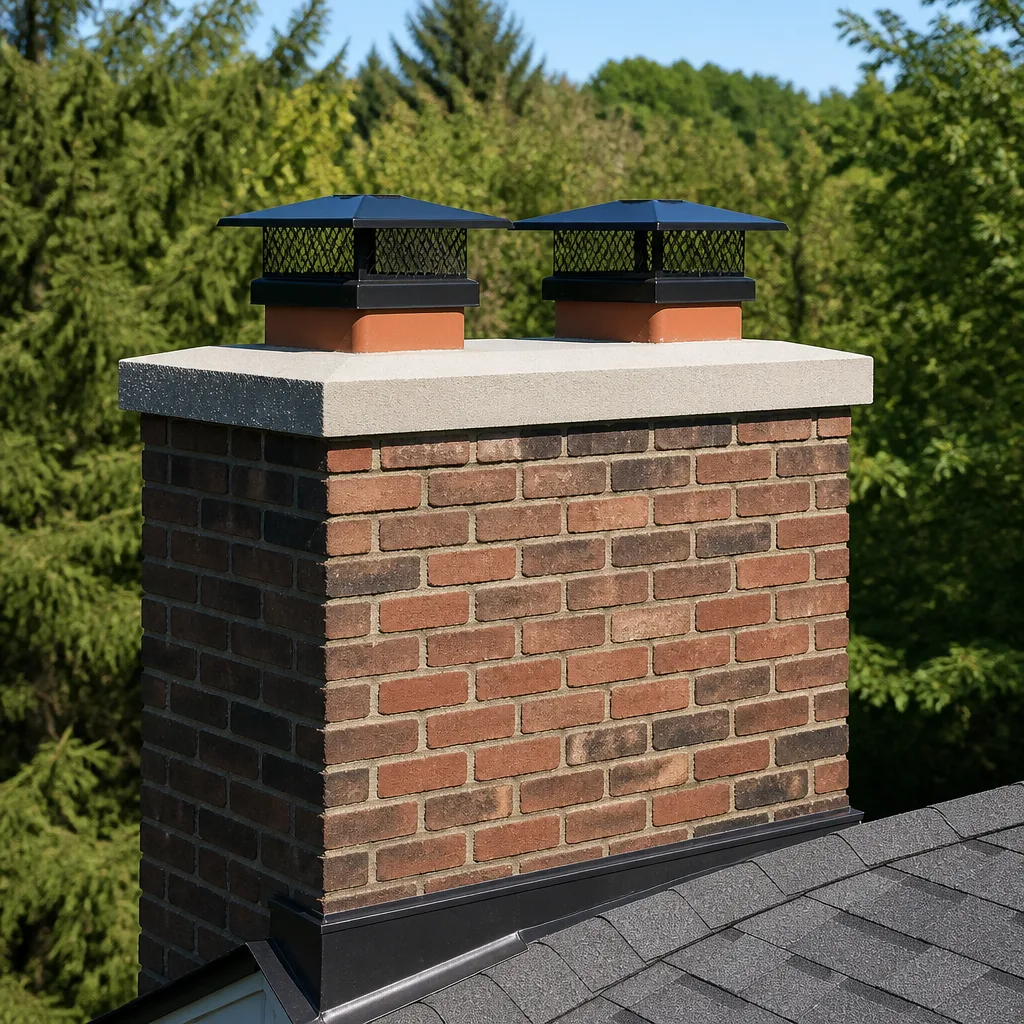
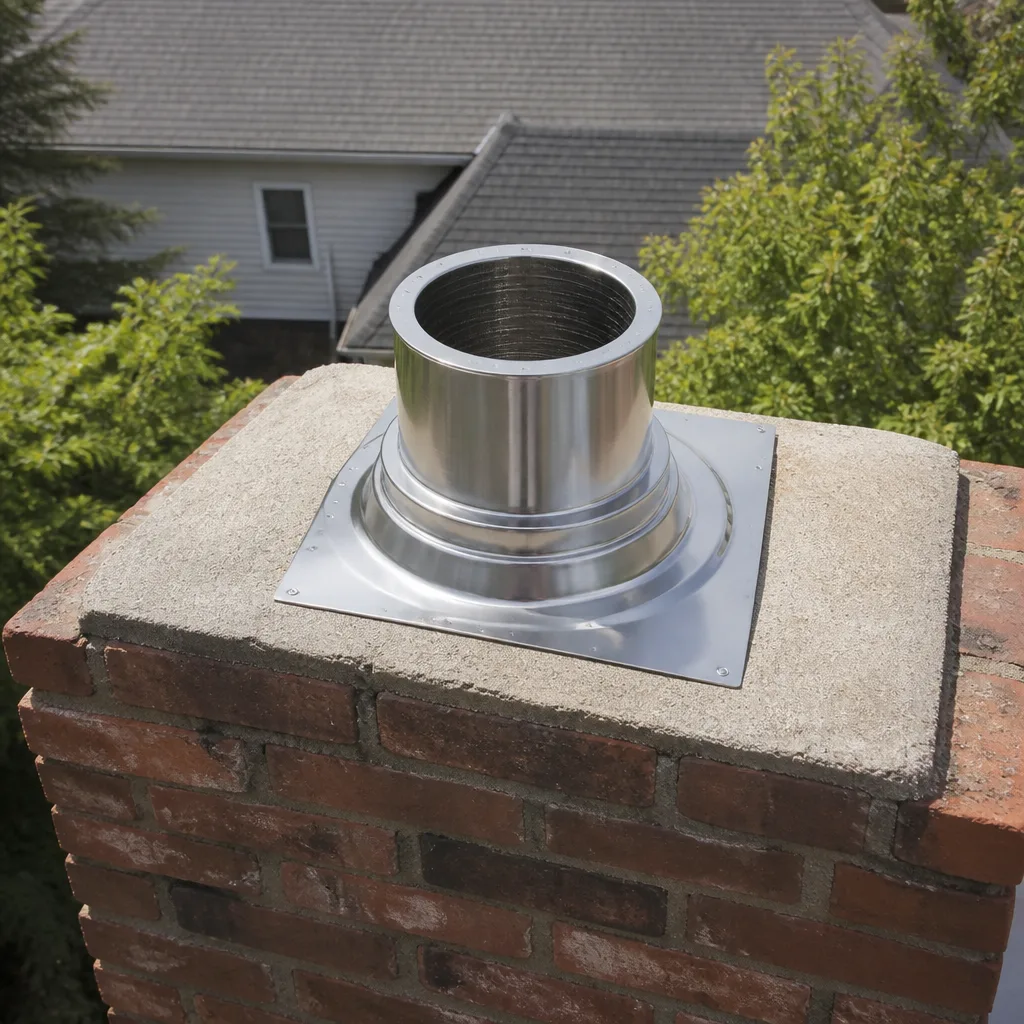
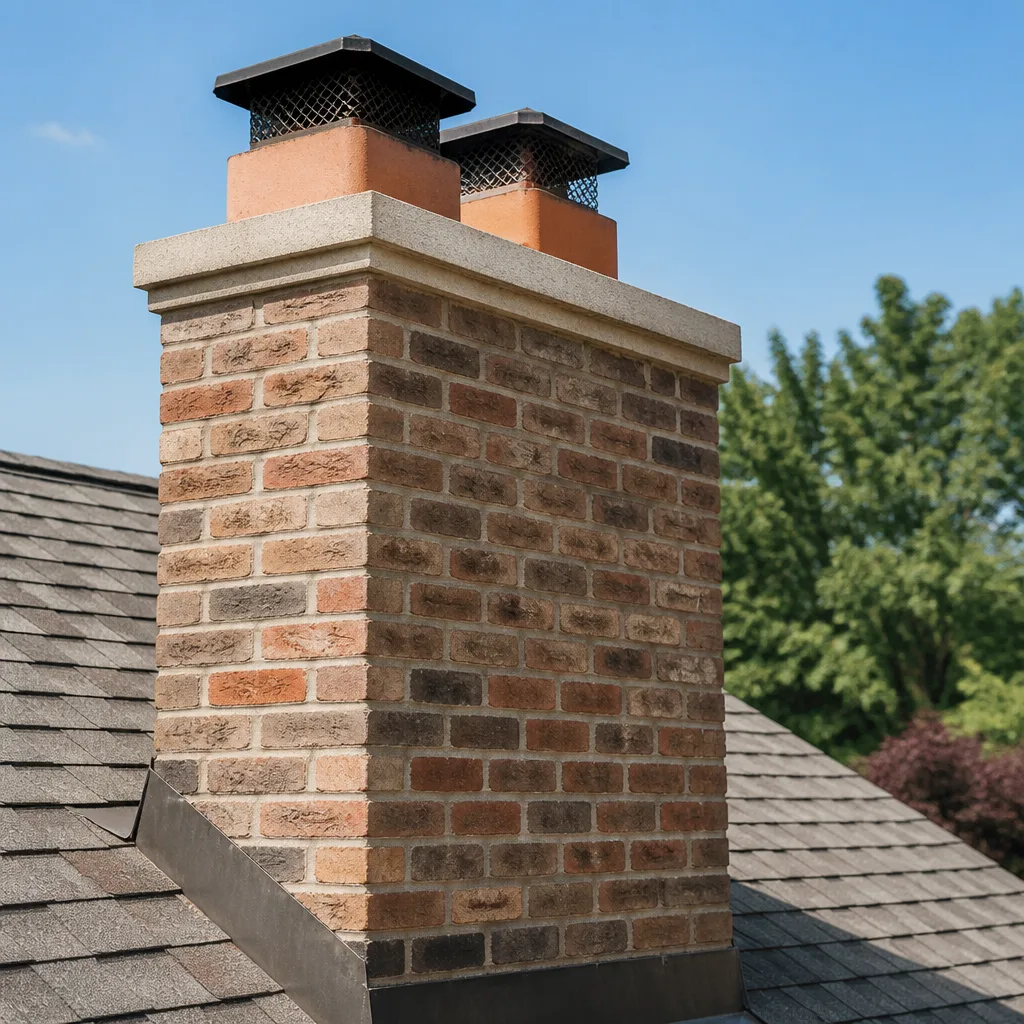
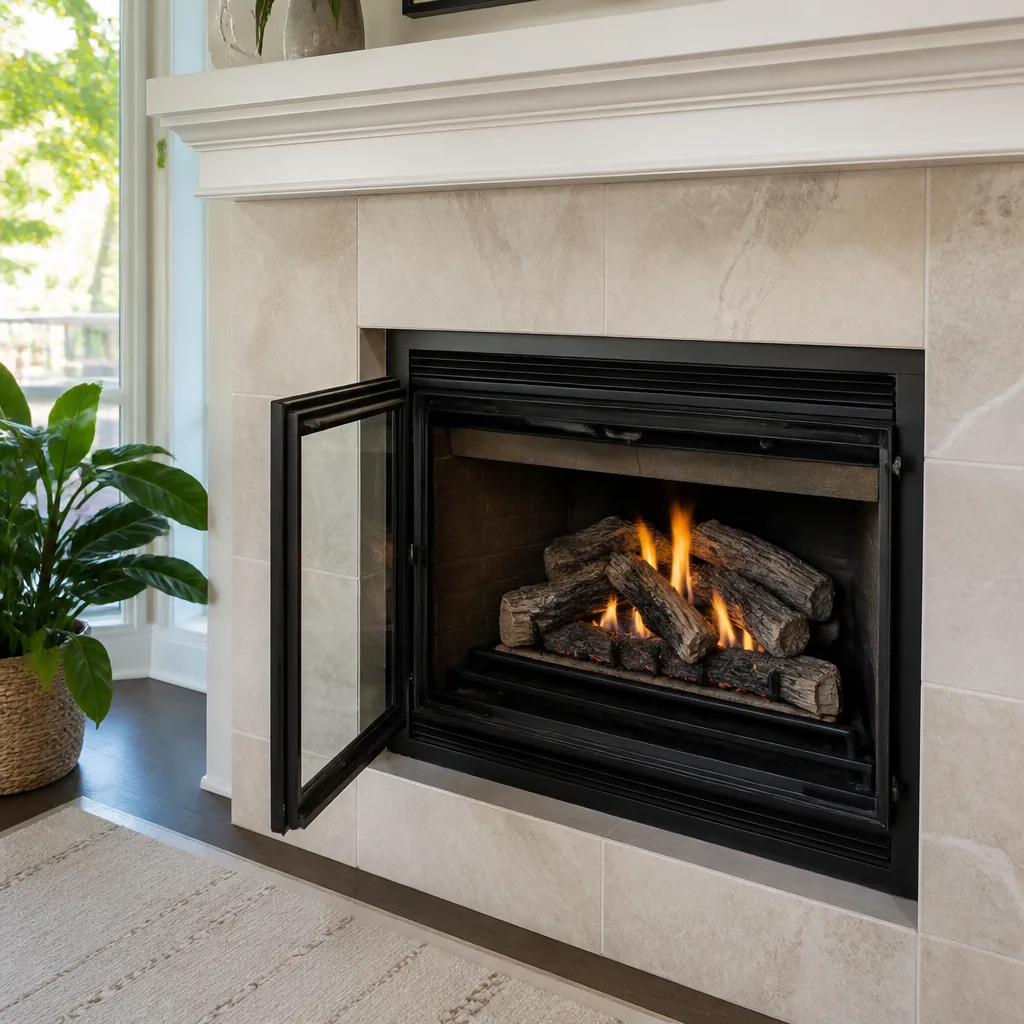
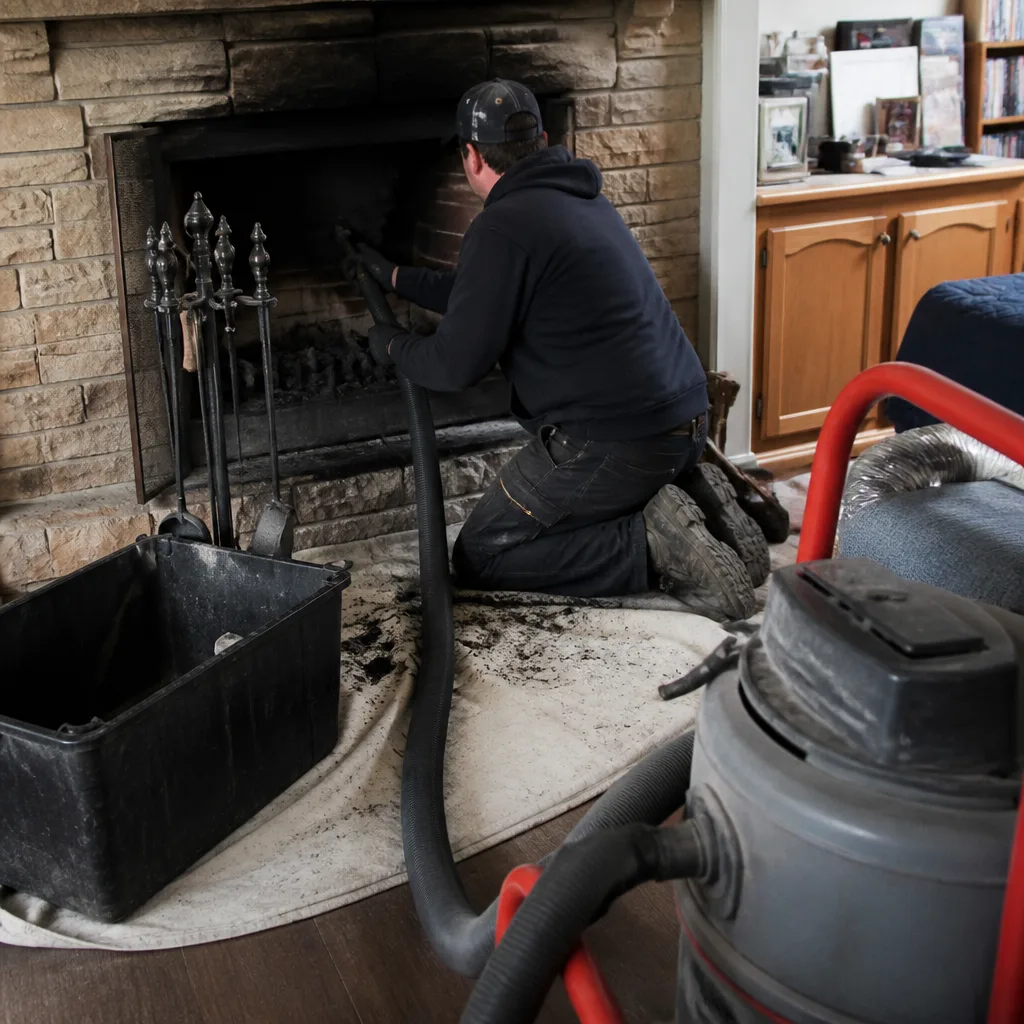 Before
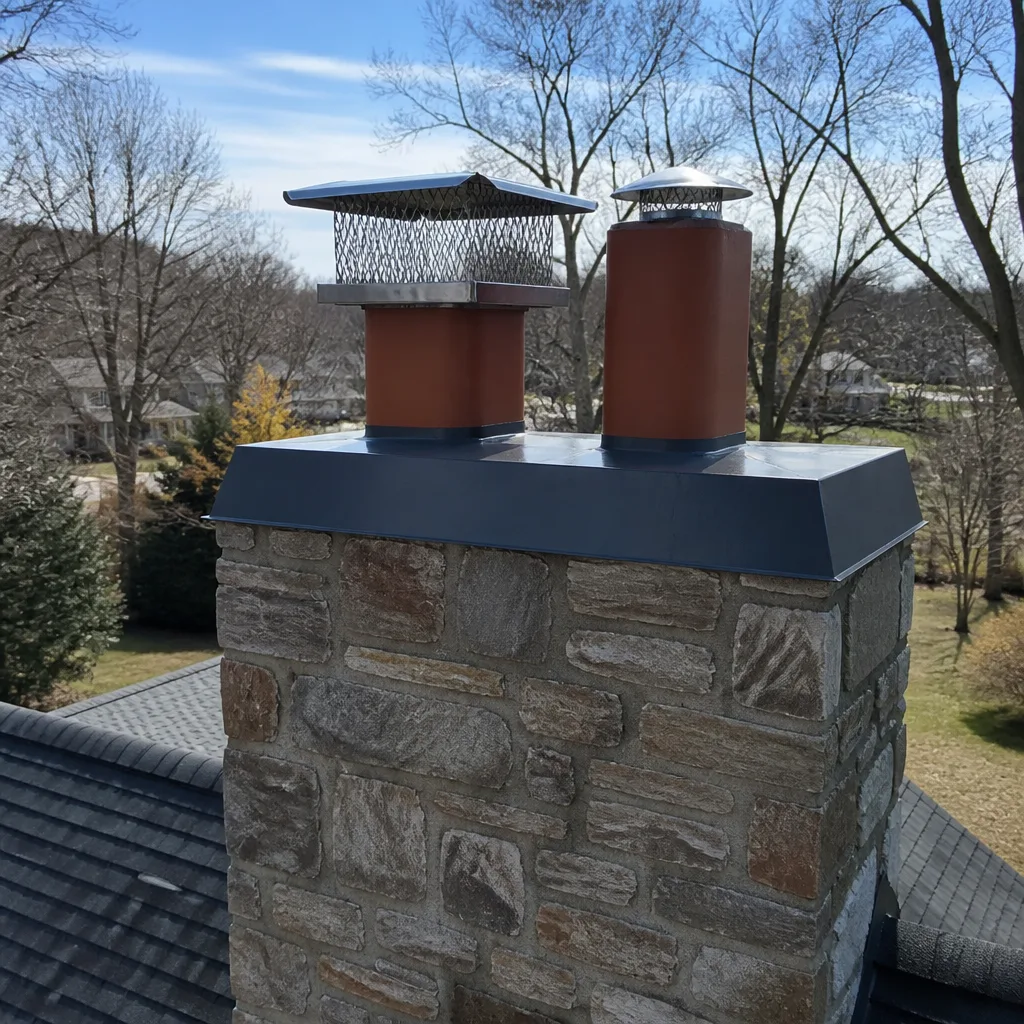 After
After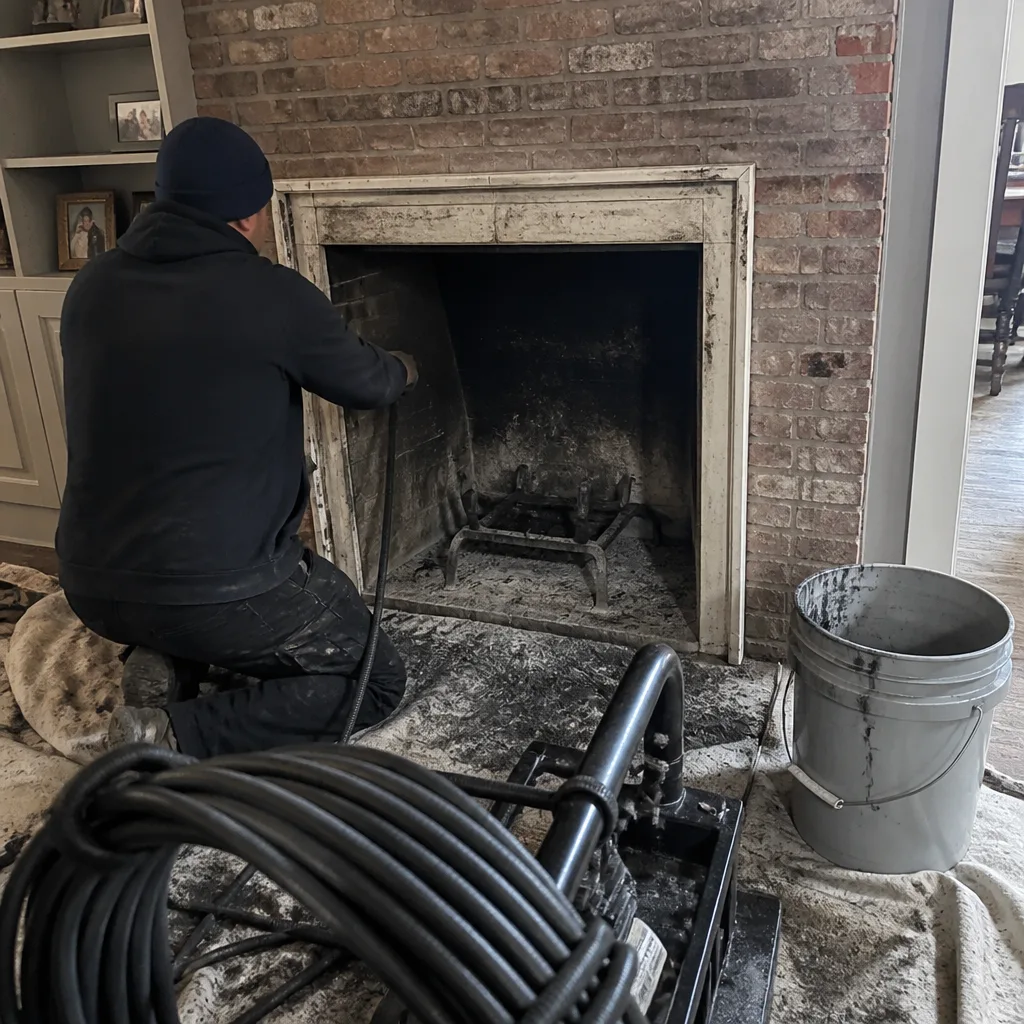 Before
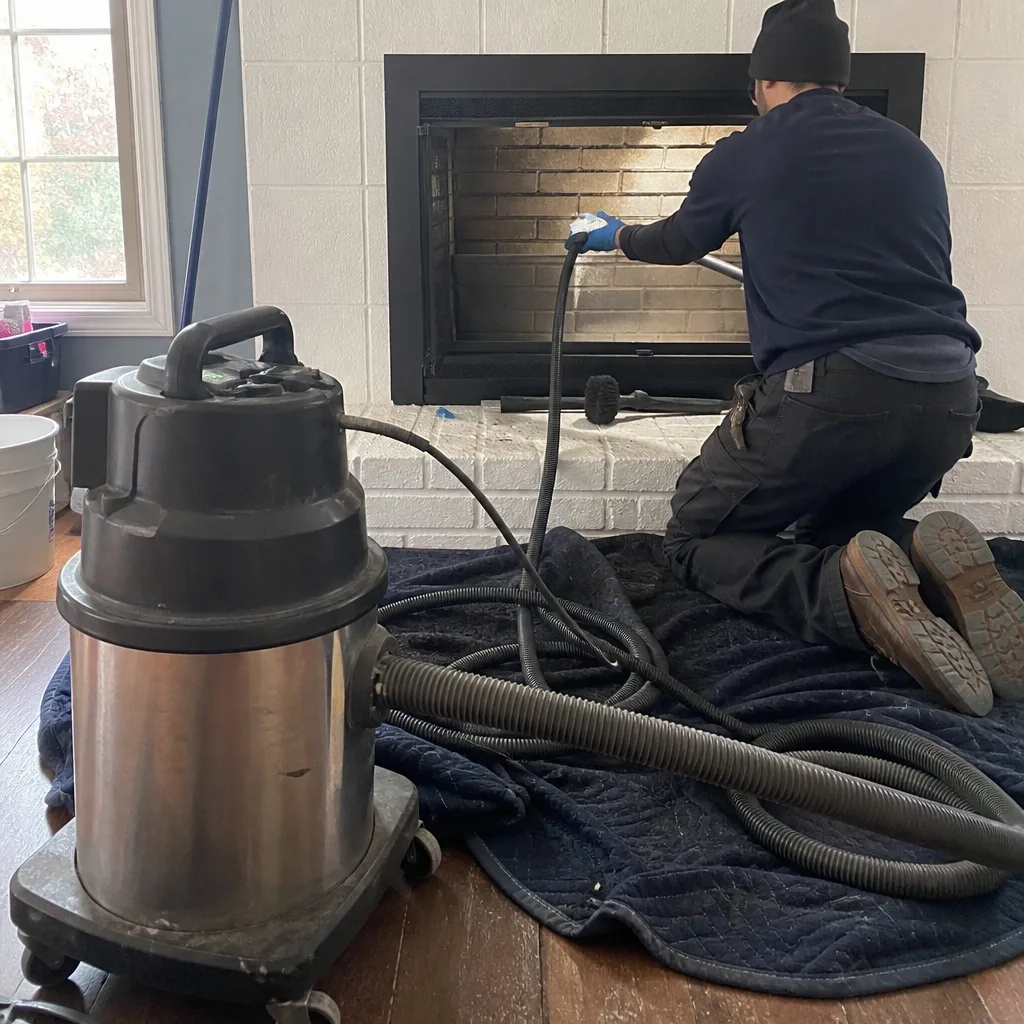 After
After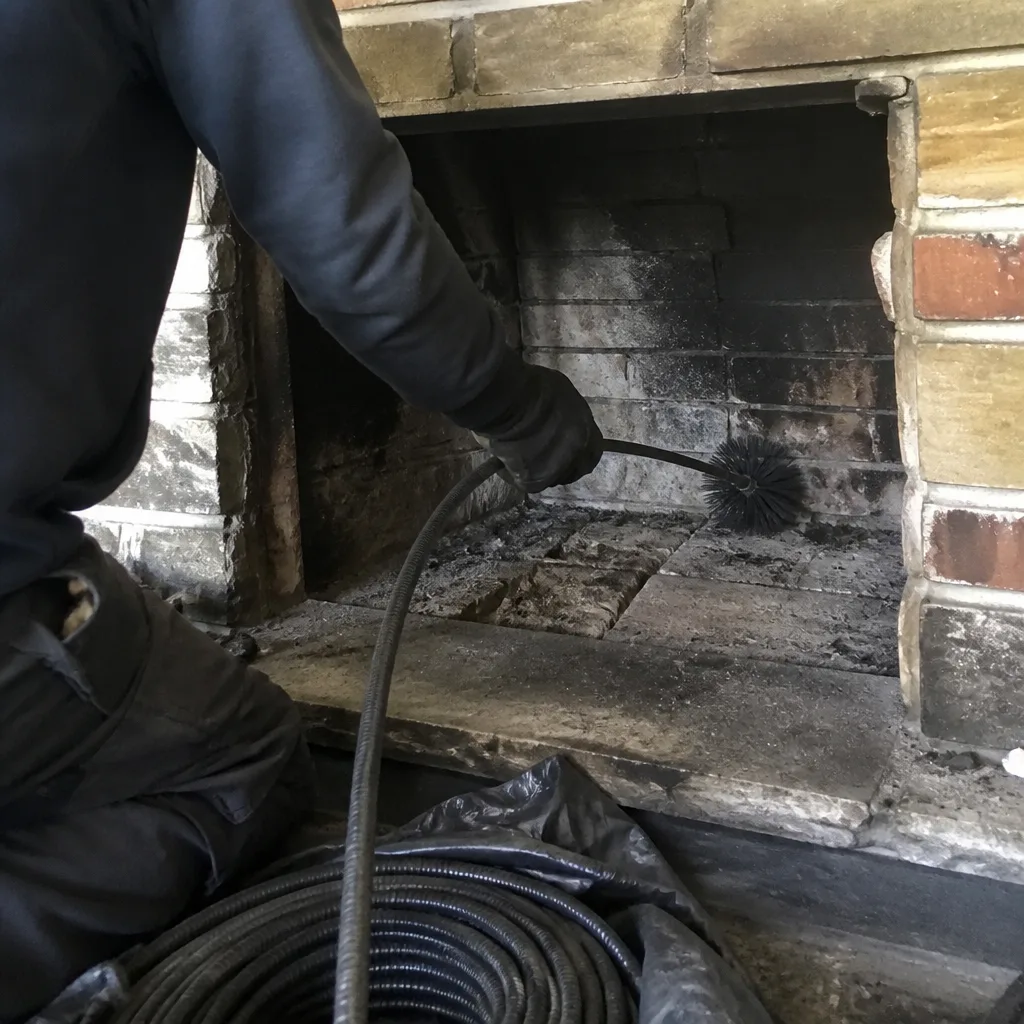 Before
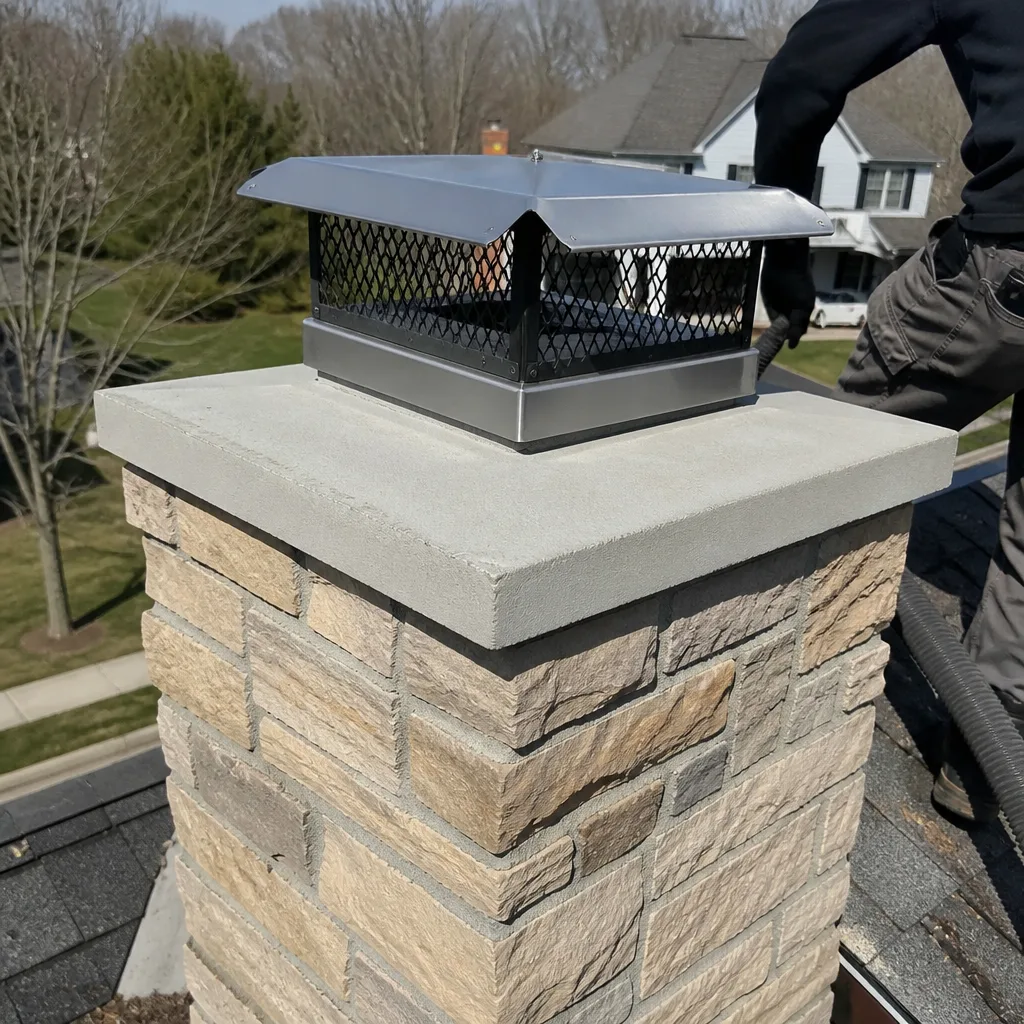 After
AfterCreosote Removal in Downingtown, PA
Creosote removal in Downingtown typically runs between $175 and $650, depending on how much buildup is present and what class of creosote has formed in your flue. Most standard Chimney Cleaning & Sweep services on a well-maintained chimney clear first-degree deposits in a single visit; heavier second- or third-degree buildup requires rotary cleaning tools or chemical treatment and takes longer. If you’re not sure what you’re dealing with, call us at (484) 558-2798 – we’ll tell you exactly what’s in the flue and give you a written price before anything starts.
Creosote is the byproduct of incomplete combustion. Every time wood burns, gases cool as they travel up the flue, and the residue sticks to the liner walls. Over time, that residue moves through three distinct stages – from dusty black soot to a hard, tar-like glaze that clings like shellac and ignites at around 1,000 degrees Fahrenheit. A chimney fire burning at that temperature can crack a clay tile liner or compromise a stainless steel system in minutes, and in a Downingtown winter when the fireplace is running hard every weekend, that risk compounds fast.
Level Two Chimney Downingtown has been doing this work since 2009 – more than 38,000 chimney inspections and cleanings completed, every one with a written price before the work started and a documented photo record when it was done. Our approach to creosote removal is part of the broader Chimney Cleaning & Sweep in Downingtown service we’ve built here, and it runs on the same standard: camera down the flue first, diagnosis in plain language, price in writing, work done – in that order.
When You Need Creosote Removal
Creosote doesn’t announce itself loudly. By the time a homeowner notices something wrong, it’s often because the chimney has already had a slow burn or the smell has become impossible to ignore on warm days. Here’s what typically brings Downingtown homeowners to the phone:
- A strong, acrid smell coming from the fireplace – especially in summer. Downingtown’s humid July and August weather draws creosote odors down into the living space. If your firebox smells like a campfire or an old ashtray on warm days, there’s almost certainly significant buildup in the flue. This is one of the most reliable early indicators, and it shows up before any visible symptom does.
- Black, oily streaks or flakes falling into the firebox. When second-degree creosote starts to shed, it drops visible debris into the firebox. If you’re sweeping out more than ash after a fire – especially oily or tarry black flakes – that material came off the liner walls.
- Reduced draw or smoky fires despite an open damper. Heavy creosote narrows the effective diameter of the flue. A fireplace that used to draw well but now smokes into the room is often partially restricted. Chester County homes built in the 1970s and 1980s, which make up a significant portion of Downingtown’s housing stock, frequently have clay tile liners that accumulate buildup at the joints.
- It’s been more than 12 months since your last cleaning. The Chimney Safety Institute of America recommends annual cleaning for any chimney in regular use. If you burned wood through last winter and haven’t had the flue checked since, there’s almost certainly enough buildup to warrant removal – NFPA 211 uses that same annual standard for a reason.
- You’ve had a chimney fire, even a small one. A slow-burn chimney fire often goes unnoticed. Signs include a low rumbling sound during a fire, debris in the firebox you didn’t put there, or a cracked or warped liner visible on camera scan. After any suspected chimney fire, creosote removal and a full Level 2 inspection are the correct next steps – not just a cleaning.
- You’re buying or selling a home in Downingtown. Real estate transactions in Chester County increasingly require documented chimney inspections. If you’re closing on a home in East Caln, Uwchlan, or West Bradford Township, a camera-scan inspection with a written report covers both the safety question and the documentation your attorney or home inspector is asking for.
Our Creosote Removal Process
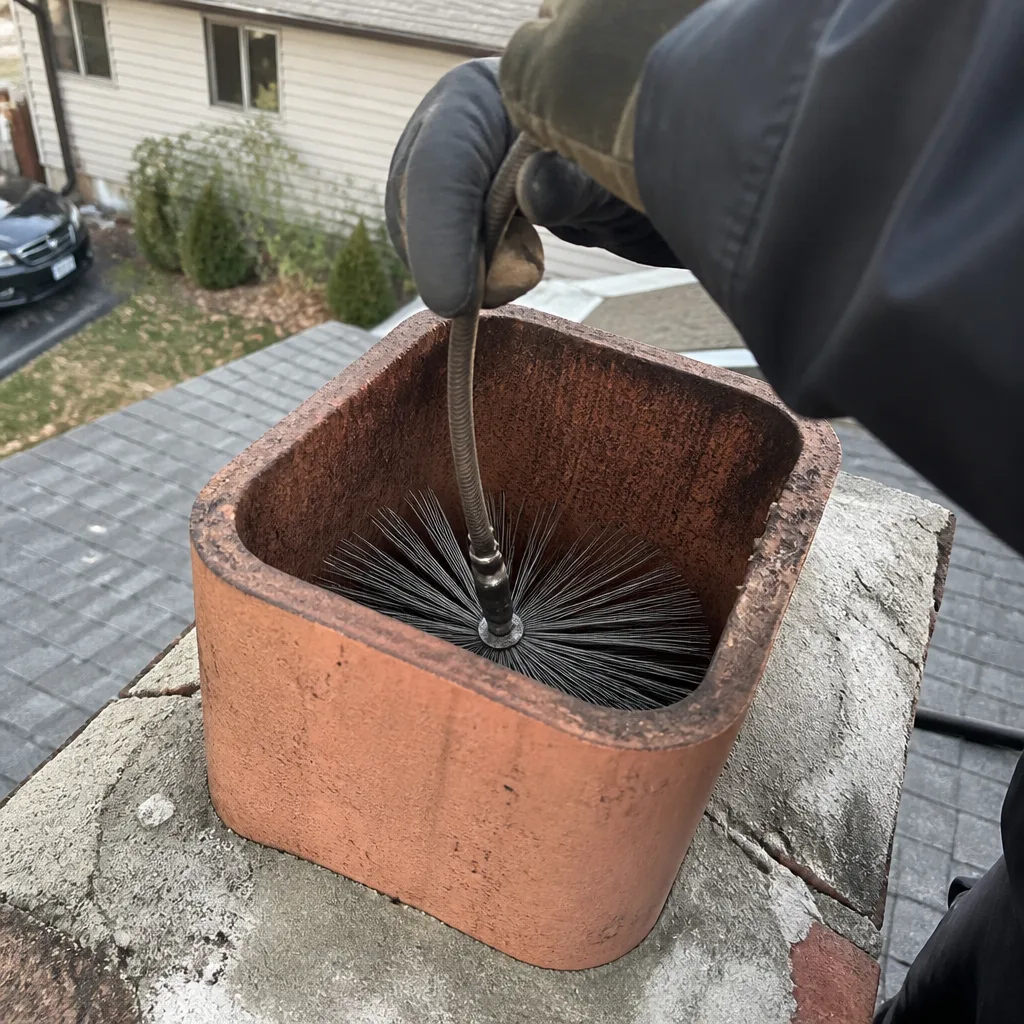
We don’t start scrubbing before we know what we’re dealing with through our Level 1 Inspection. The sequence below is the same on every job, and it’s why we can give you a written price that holds – not an estimate that changes once the tech is already in your home.
- Camera scan before anything else. We run a video camera down the full length of the flue – firebox to crown – before touching a brush. The footage tells us the creosote class, whether the liner is intact, and whether there’s any cracking, spalling, or joint separation that would affect how we clean. You get to see the footage. This is NFPA 211 Level 2 practice, and it’s been our default since 2009, not something we added when regulators caught up.
- Written price, written scope, written warranty – before work starts. Haven Standard Clause 1 is non-negotiable on every job: you have the price in your hand before anyone picks up a brush. First-degree removal on a clean liner, second-degree rotary work, third-degree chemical treatment – each one is priced separately on paper. No verbal quotes that shift after the fact.
- Mechanical cleaning matched to the creosote class. Class I (light, dusty) deposits are removed with standard chimney brushes. Class II (harder, flaky buildup) typically requires rotary cleaning heads and more passes. Class III (the glazed, tar-like material) usually needs a chemical treatment applied first to harden and convert the glaze so it can be mechanically removed in a follow-up visit. We use professional-grade chemical treatments – Copperfield-sourced products – and we’ll tell you upfront if your flue needs the two-step approach.
- Firebox and smoke chamber cleaning. Creosote doesn’t only build up in the liner. The smoke chamber – the angled area directly above the damper – is one of the highest-concentration zones in many Downingtown homes, particularly those with open masonry fireplaces. We clean the chamber, smoke shelf, and damper area as part of every full removal job, not as an add-on.
- Post-removal camera scan and photo documentation. After the flue is clean, the camera goes back down. The before-and-after footage is documented and archived under Haven Standard Clause 4. You walk away with a photo record of the condition of your liner, any findings that need attention, and written confirmation of what was done. That documentation matters when you call your insurance company or go to sell the house.
- Written findings and next-step recommendations. If the scan shows cracked tiles, failed mortar joints, or anything that warrants repair, we put it in writing – what we found, where it is, and what it means for the safe operation of your fireplace. No pressure, no upselling the job before you’ve had time to read the report. If something needs to be fixed, you’ll know exactly what it is and why.
 Before
 After
AfterCreosote Removal Pricing in Downingtown
Creosote removal in Downingtown costs between $175 and $650 for most residential jobs. The spread is wide because the work varies significantly depending on what class of creosote is present and how much of it has built up over the seasons. Here’s how the pricing typically breaks down:
| Creosote Class / Condition | Typical Price Range | Notes |
|---|---|---|
| Class I – Light dusty/flaky deposits (standard annual cleaning) | $175 – $250 | Single visit; brush cleaning; included in standard sweep |
| Class II – Harder, crunchy or tar-like buildup | $250 – $400 | Rotary cleaning heads; more labor time; 1 visit |
| Class III – Glazed, hardened creosote (severe buildup) | $400 – $650+ | Chemical treatment + follow-up mechanical removal; 2 visits typical |
| Add: Full NFPA 211 Level 2 Camera Inspection | Included on every visit | Pre- and post-cleaning footage; photo record documented |
A few things move the number in either direction. Chimney height matters – a two-story home in Downingtown’s Bradford Walk or the newer construction along Boot Road tends to have longer flues than a ranch in East Caln, and more linear footage means more time. Flue type and condition also affect labor: a clay tile liner in good condition cleans differently than a deteriorating liner with loose joints that have been trapping material for years. And if it’s been more than two seasons since the last cleaning, expect the job to take longer regardless of what class the creosote technically falls into.
One thing that doesn’t move: the price is in writing before anyone starts. That’s Haven Standard Clause 1, and it applies to a $190 standard sweep exactly the same way it applies to a $600 third-degree removal. Call us at (484) 558-2798 and we’ll give you a written estimate – no obligation, no pressure to schedule on the spot.
We also offer a free second opinion on any written estimate from another company. If you’ve already got a quote from another Downingtown chimney service, bring it to us and we’ll tell you whether the scope and price are reasonable for what’s described.
What Distinguishes Level Two’s Approach in Downingtown
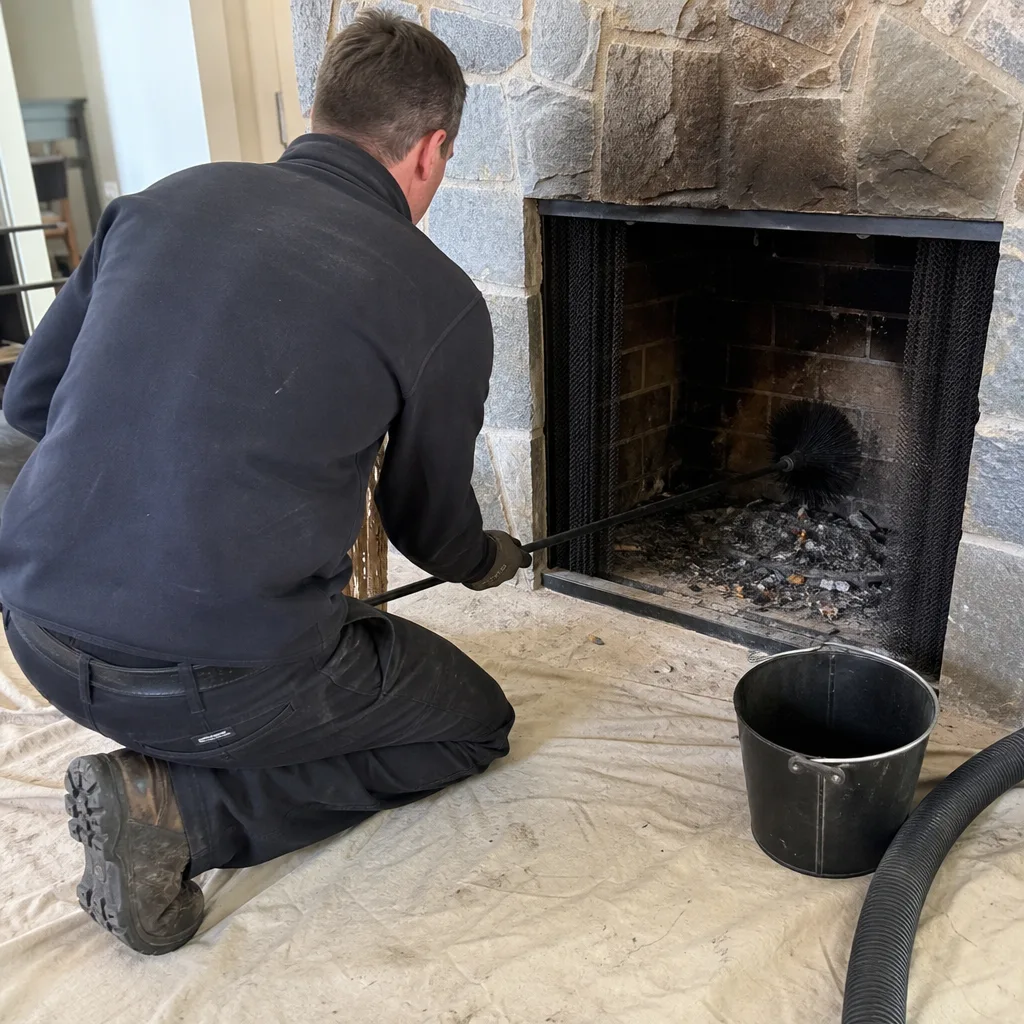
There’s no shortage of chimney services in Chester County. What separates our work isn’t a slogan – it’s the sequence we follow on every job and the documentation you hold when it’s done.
The Level 2 Inspection camera scan before cleaning matters more than most homeowners realize. Without it, a technician is guessing at what class of creosote is present and how much liner damage, if any, already exists. A guess means the price can change mid-job, and it means you have no documented baseline for your liner’s condition. We’ve been running camera-scan documentation since 2009 – it became Clause 4 of the Haven Standard because it’s the only way to actually prove the work was done and the flue is clear.
On third-degree (glazed) creosote jobs specifically, the chemical treatment step is where some companies cut corners. The chemistry has to dwell for a defined period before mechanical removal will work – skipping or shortening that step leaves material on the liner wall and creates a false sense of completion. We source treatment products through our materials network, which includes Copperfield and Olympia Chimney suppliers, and we schedule the follow-up cleaning visit before we leave your home after the first one. There’s no back-and-forth trying to rebook.
Every job is also backed by the 365-Day Done Right Promise. If something wasn’t done correctly – if residue was left that shouldn’t be there, or if a step in the documented scope wasn’t completed – we come back and make it right. That commitment is stamped on the job record, not just stated here.
Corrine Halstead leads the team, and our technicians are background-checked and uniformed. You’ll get a text when the tech is on the way. The person who answers when you call (484) 558-2798 at 7pm is a live person, not a voicemail.
Creosote and Downingtown’s Wood-Burning Season
Downingtown sits in a climate zone where winters run hard from mid-November through mid-March – often four straight months of regular fireplace use for a household that heats primarily or supplementally with wood. That burn pattern is exactly what produces the transition from Class I to Class II creosote across a single season, especially in a fireplace that tends to run at lower temperatures or burns wood that isn’t fully seasoned.
We see it most in homes that burn throughout the season without an annual cleaning – by February or March, what started as a dusty first-degree deposit in October has compacted and partially hardened into something that takes rotary cleaning heads to remove. The cost difference between a $200 standard cleaning and a $400 second-degree removal is real, and it’s driven entirely by the buildup that accumulated during the season. A cleaning in October before the burn season starts is cheaper and faster than one in April after it ends.
Homes in the older sections of Downingtown Borough – particularly those built before 1980 with original clay tile liners – also tend to accumulate more buildup at the tile joints, where grout has receded over decades and the rough edges catch material on the way up. The camera scan shows this clearly; a flashlight inspection does not.
FAQs – Creosote Removal
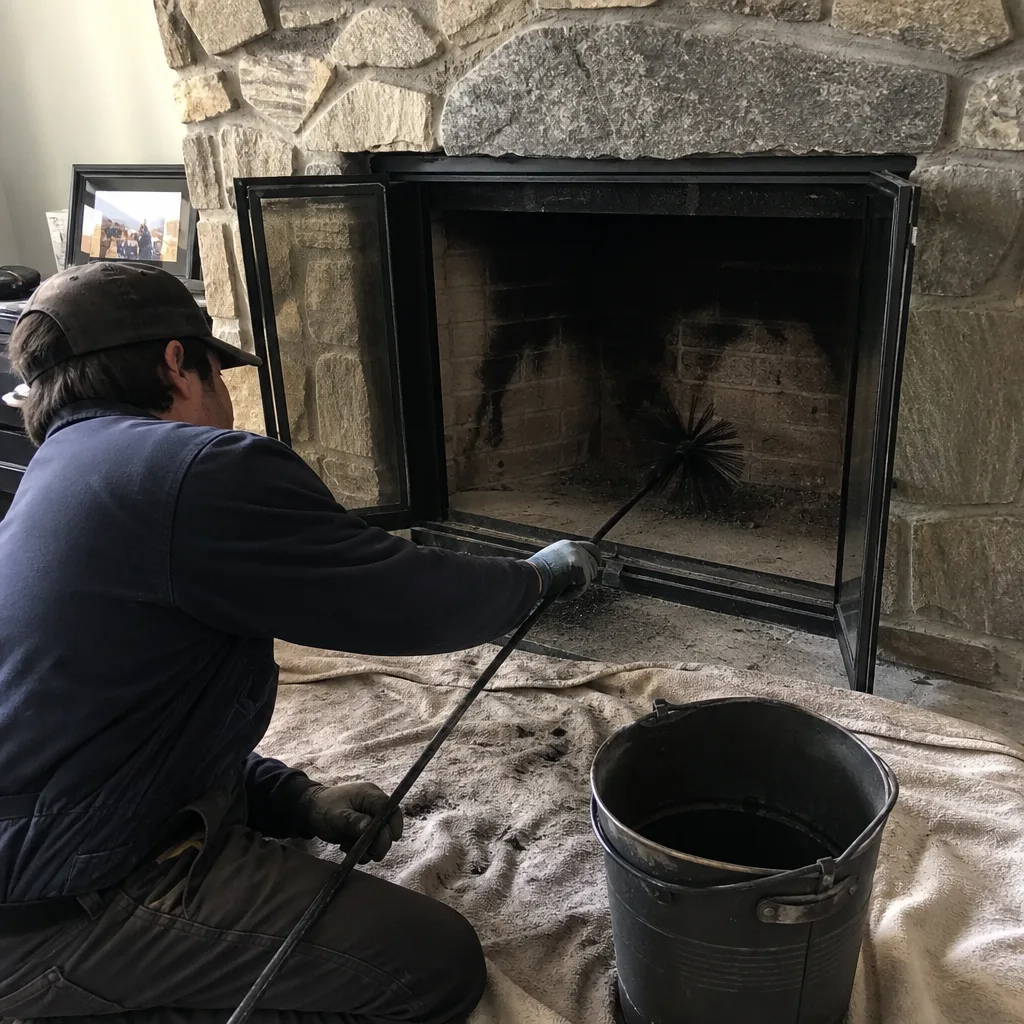
How much does creosote removal cost in Downingtown?
Creosote removal in Downingtown runs $175 to $650 for most residential jobs, with the final number determined by the creosote class and the amount of buildup present. A standard annual cleaning with Class I deposits typically falls between $175 and $250. Class II buildup requiring rotary tools runs $250 to $400. Class III glazed creosote – the hardened, tar-like material that requires chemical treatment before mechanical removal – is $400 to $650 or above, and usually takes two visits. Every price is given in writing before work starts. Call (484) 558-2798 for a written estimate.
How dangerous is creosote, and when does it become an emergency?
Class III creosote is a serious fire hazard. It’s a dense, flammable glaze that ignites at roughly 1,000 degrees Fahrenheit – a temperature that clay tile liners and even some stainless systems aren’t rated to sustain without damage. A chimney fire burning at that level can crack or spall a liner in one event, and a compromised liner lets heat and combustion gases reach the surrounding structure. If you’ve noticed a rumbling or roaring sound during a fire, unusual amounts of debris in the firebox, or an acrid smell that wasn’t there before, treat that as a reason to stop using the fireplace and get a camera scan before the next fire. Don’t wait for the season to end. Call (484) 558-2798 and we’ll get someone out with a camera.
Can creosote be removed in one visit?
Class I and most Class II creosote is removed in a single visit. Class III glazed creosote generally requires two visits: the first to apply a chemical treatment that converts and hardens the glaze, and the second – typically scheduled 10 to 14 days later – to mechanically remove the treated material. We book both appointments before we leave your home after the first visit. You won’t need to chase us down for the follow-up.
What’s the difference between a chimney sweep and creosote removal?
A standard chimney sweep removes light deposits – the dusty, flaky Class I creosote that builds up during normal seasonal use. Creosote removal specifically refers to the more intensive work required when Class II or Class III deposits are present. Every chimney sweep we do includes a camera scan that classifies what’s in the flue; if what we find requires rotary cleaning tools or chemical treatment rather than standard brushes, we tell you in plain terms, give you a revised written price, and proceed only with your approval. The parent service page for Chimney Cleaning & Sweep in Downingtown covers the full scope of what our cleaning visits include.
If you’re seeing any of the signs above – or if it’s simply been more than a year since the last cleaning – call (484) 558-2798. We’ll schedule a camera scan, give you a written price for any removal work needed, and complete the job with a documented photo record you keep. No verbal quotes, no surprises after the tech is already in your home. That’s how we’ve run every job since 2009, and it’s not changing. Estimates are free.
Written by Corrine Halstead, Owner at Level Two Chimney Downingtown, serving Downingtown.